To broaden students' horizons, engage with the forefront of statistical research, and implement the educational reform project of the statistics major - the Bingwen Plan, on April 20, 2017, our college's Vice Dean Wu Chunjie, along with counselors Yao Liming and Wang Yuqin, led the experimental class students from the 2014 and 2015 cohorts. Under the leadership of Dean Zhou Yong, they visited the Institute of Mathematics and Systems Science of the Chinese Academy of Sciences located on East Zhongguancun Road in Beijing, listened to reports, and took part in system demonstrations, the supercomputer room, and the history museum.
The Institute of Mathematics and Systems Science, Chinese Academy of Sciences was established in December 1998, formed by integrating four research institutes: the Institute of Mathematics (established in 1952), the Institute of Applied Mathematics (established in 1979), the Institute of Systems Science (established in 1979), and the Institute of Computational Mathematics and Scientific Engineering Computing (established in 1995). In addition to the four subordinate research institutes, the academy also has key laboratories such as the National Key Laboratory of Scientific and Engineering Computing, the Key Laboratory of Management Decision and Information Systems of the Chinese Academy of Sciences, the Key Laboratory of System Control of the Chinese Academy of Sciences, the Key Laboratory of Mathematical Mechanization of the Chinese Academy of Sciences, the Hua Luogeng Key Laboratory of Mathematics, the Key Laboratory of Random Complex Structures and Data Science, as well as the Morning Star Mathematical Center of the Chinese Academy of Sciences and the Center for Forecasting Science of the Chinese Academy of Sciences. In November 2010, the National Center for Mathematics and Interdisciplinary Sciences was established, aimed at building a high-level research platform for interdisciplinary cooperation between mathematics and other disciplines at the national level; through system and mechanism innovation, it seeks to gather the strengths of mathematics and related disciplines at home and abroad, collaborate on key issues, and become an internationally renowned scientific research base.
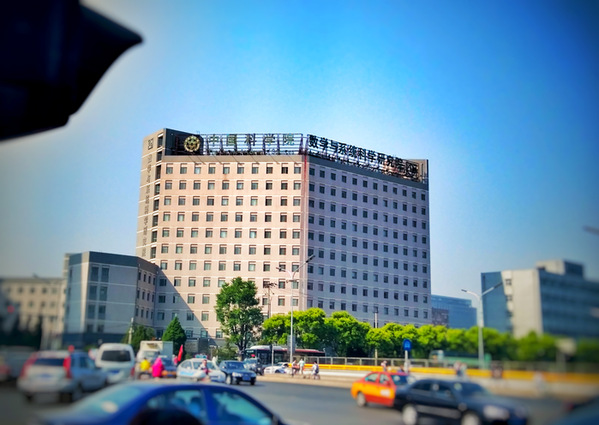
Figure: Institute of Mathematics and Systems Science, Chinese Academy of Sciences
The visiting group first arrived at Siyuan Building to listen to the reports from Academician Lin Qun and Associate Researcher Zhang Xinyu. Academician Lin Qun shared with us the plans and achievements of promoting calculus among elementary, middle, and high school students, as well as among the general public. Associate Researcher Zhang Xinyu shared his basic understanding of statistics through the questions "What is statistics?", "Where does it come from?", and "Where is it going?".
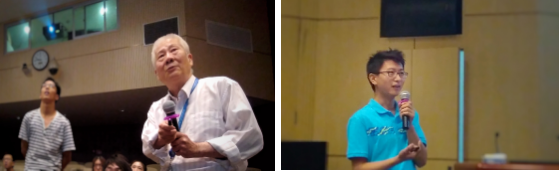
Left image: Academician Lin Qun from the Chinese Academy of Sciences brings us a report on the teaching of calculus.
Right image: Associate Researcher Zhang Xinyu from the Chinese Academy of Sciences presents a report on statistics for us.
Subsequently, the visiting group arrived at the high-performance computing cluster room. According to the staff, the cluster is primarily used for algorithm simulations, which mainly include projects from the research institute and projects from the Ministry of Science and Technology. Additionally, since the computing cluster is exposed to a public environment, it only processes publicly available data.
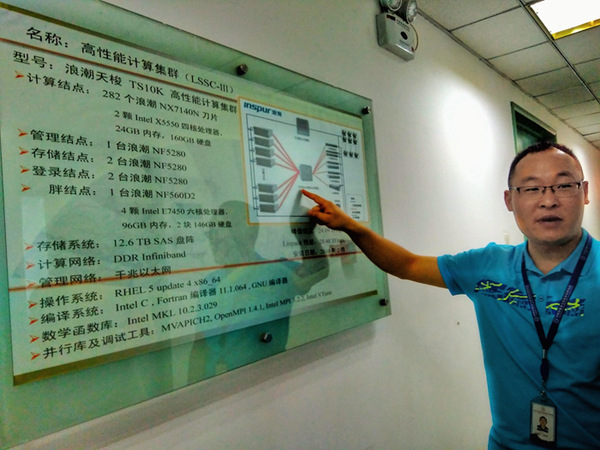
Image: Staff introduced us to the configuration of the supercomputer.
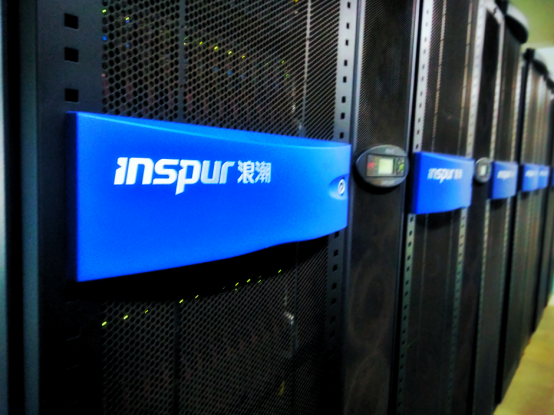
Image: Inspur Tsinghua TS10K High-Performance Computing Cluster
When we arrived at the Academy of Mathematics and Systems Science, Professor Zhou Yong, the Dean of the School of Statistics and Management at Shanghai University of Finance and Economics, welcomed us. The Dean led us to visit the history museum of the academy and introduced us to the specifics of the academy, allowing us to experience a deep academic reverence. Dean Zhou Yong had friendly exchanges with the students of the Statistics Experimental Class, and the students introduced their academic interests one by one, receiving encouragement and recognition from Dean Zhou.
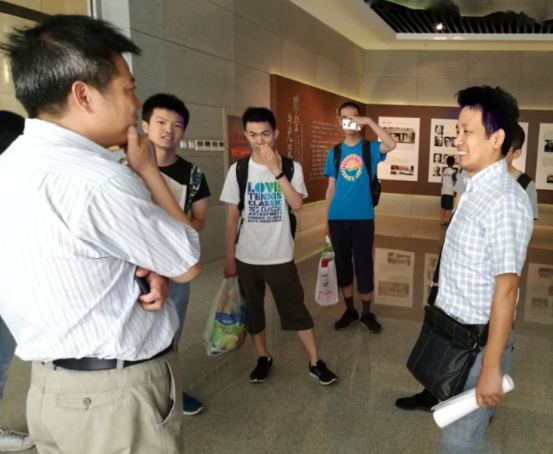
Image: Dean Zhou Yong leads the visiting group to tour the History Museum of the Academy.
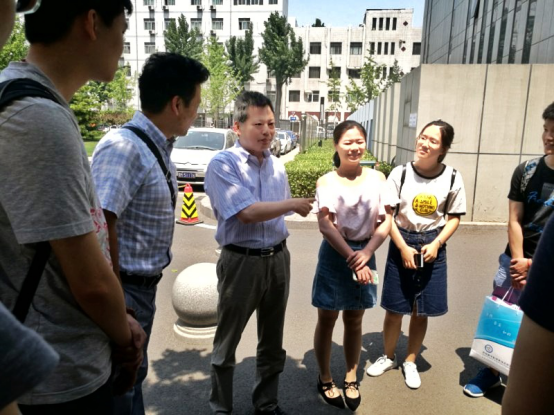
Picture: Dean Zhou Yong engaging in friendly conversation with students of the experimental class.
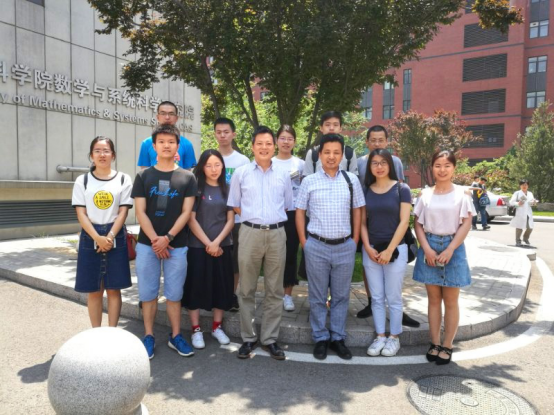
Figure: Dean Zhou Yong with the visiting group
In May 2010, our school reached a comprehensive strategic cooperation agreement with the Institute of Mathematics and Systems Science of the Chinese Academy of Sciences, leveraging the advantages of the Academy to strengthen the construction of the statistics discipline and collaborate on high-level talent training. Benefiting from the support of the Bingwen Program, the experimental class students, through this visit to the Chinese Academy of Sciences, came into contact with the forefront of academic research, experienced the influence of renowned scholars, and had warm exchanges with the director, gaining a firsthand sense of the atmosphere at the research center, thereby laying a solid foundation for better development in their academic journeys in the future.