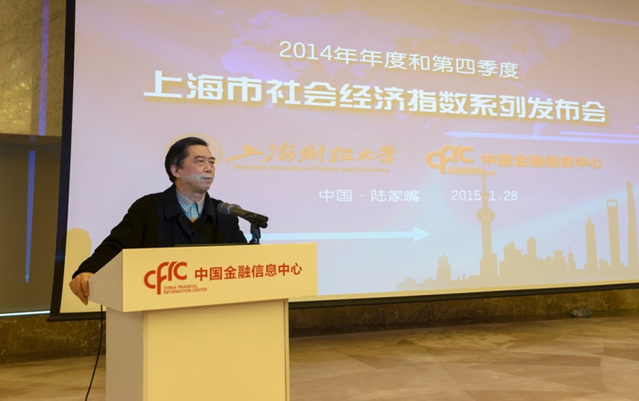
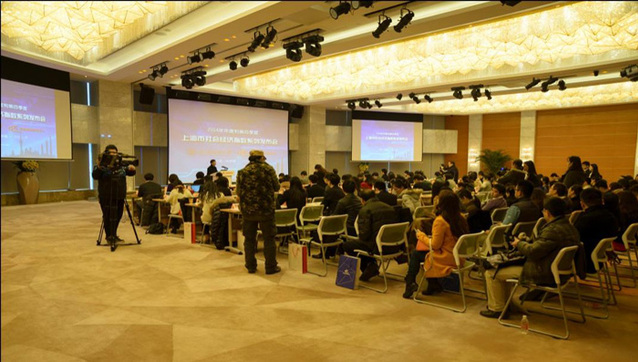
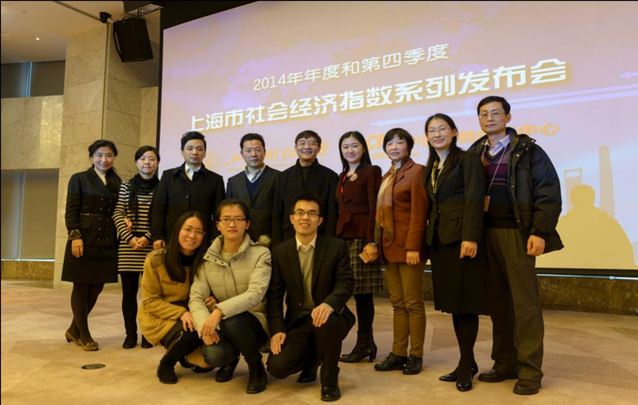
On the morning of January 28, 2015, Shanghai University of Finance and Economics and the China Financial Information Center jointly held the "2014 Annual and Fourth Quarter Shanghai Socio-Economic Index Series" press conference at the Shanghai Hall on the third floor of the China Financial Information Center on East Yuyuan Road, Lujiazui. They released the "2014 Annual Shanghai Consumer Satisfaction Index," "2014 Fourth Quarter Shanghai Consumer Confidence Index," and "2014 Fourth Quarter Shanghai Investor Confidence Index." The Shanghai Consumer Satisfaction Index includes 1 composite index, 7 major category indices, and 30 specific product indices. The Shanghai Consumer Confidence Index includes two core indices and 8 category indices, while the Shanghai Investor Confidence Index includes four core indices and 17 category indices.
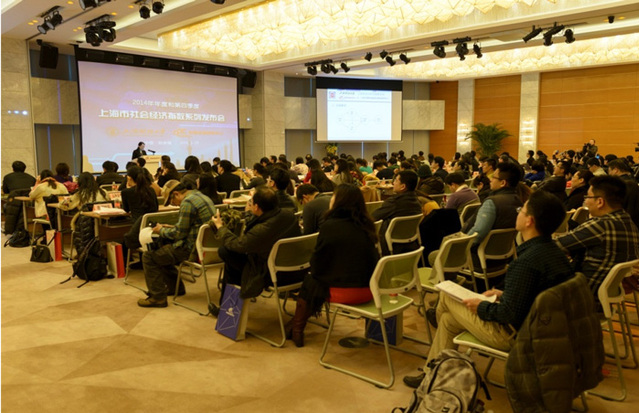
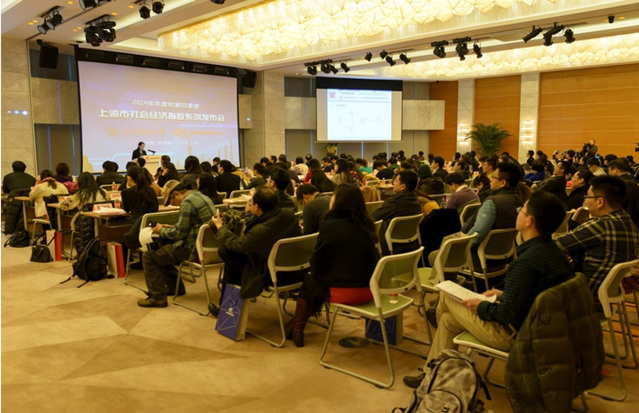
The press conference was hosted by Professor Xu Guoxiang, director of the Applied Statistics Research Center at Shanghai University of Finance and Economics. Over 200 participants attended the press conference, including more than 60 media outlets from central and local provinces and cities in Shanghai, such as newspapers, magazines, news agencies, radio, television, and online media, as well as representatives from relevant departments in Pudong New Area, factor market representatives, representatives from industry associations and trade unions, financial institutions, businesses, and higher education institutions.
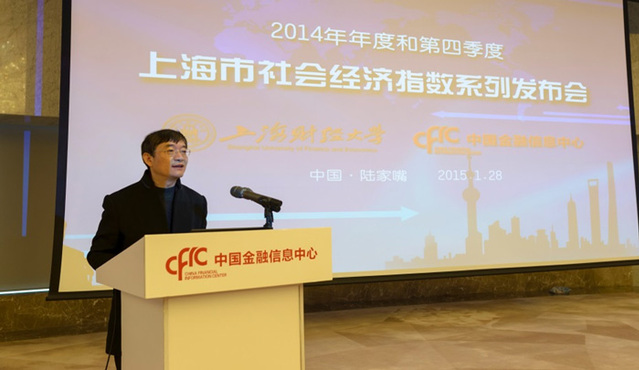
Our school's Vice President, Professor Jiang Chuanhai, attended the press conference and delivered a speech. In his remarks, Vice President Jiang pointed out that since its official launch in the third quarter of 2007, the Shanghai Social Economic Index series aims to timely and accurately reflect the satisfaction, confidence, and mentality of consumers and investors in Shanghai, as well as their changing trends. This provides a basis for the government’s macro-control, various sectors of society, consumers, and investors to grasp the trends in consumption and investment in Shanghai, as well as the trajectory of Shanghai's economic development, and it has already become a brand. By compiling and releasing these indices and establishing an original database, we can fill the research gap in this field for Shanghai, serve as an important supplement to the current economic statistical data, and play a role in monitoring and early warning of economic operations. The compilation of the Shanghai Consumer Satisfaction Index is intended to comprehensively reflect the quality of economic operation in Shanghai and provide a basis for the Shanghai government to formulate regulatory policies. At the same time, this index helps enterprises improve product quality, promotes economic development, and acts as a facilitator for building a harmonious society. Therefore, the indices jointly released by Shanghai University of Finance and Economics and the China Financial Information Center reflect our research directed at the main battlefield of economic construction, and represent one of the important ways of integrating production, education, and research. They are significant measures to serve Shanghai's economic construction, support government decision-making, and assist Shanghai consumers and investors.
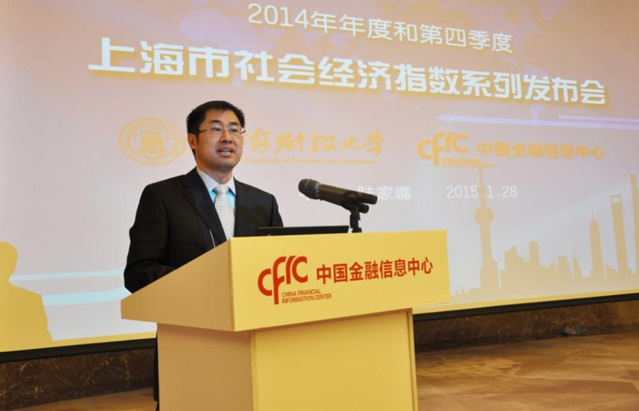
Mr. Ye Guobiao, General Manager and Legal Representative of the China Financial Information Center, attended the press conference and delivered a speech. He pointed out that the cooperation between Shanghai University of Finance and Economics and the China Financial Information Center under Xinhua News Agency in the field of indices is a strong collaboration that can achieve complementary advantages. The joint release of this index series will undoubtedly further enhance the visibility and brand influence of the index series, as well as its social value and commercial value.
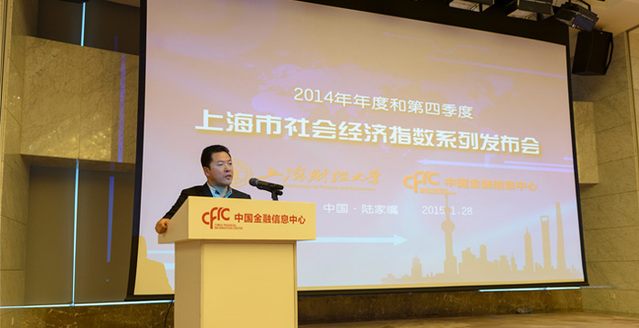
Dr. Liao Yinglin from the Applied Statistics Research Center of Shanghai University of Finance and Economics presented the 2014 annual Shanghai Consumer Satisfaction Index and its operational situation on behalf of the research team. The survey conducted by the Applied Statistics Research Center shows that the Consumer Satisfaction Index for Shanghai in 2014 is 70.68 points, indicating that Shanghai citizens are generally satisfied with the products and services they consume. This level is also the highest value reached since 2010, reflecting a continuous improvement. At the same time, in areas such as food safety, healthcare, and online services, consumer satisfaction remains low and needs "more effort." In 2014, among the seven major categories of consumer goods and services surveyed, ranked from highest to lowest satisfaction index, they are: household appliances and services at 74.75 points, education, culture and entertainment services at 73.59 points, transportation and communication at 71.87 points, residence at 70.96 points, clothing at 69.40 points, food at 69.14 points, and medical services at 64.81 points. Shanghai citizens are more satisfied with household appliances and services and education, culture, and entertainment services, while their satisfaction with medical services and food is lower. In 2014, Shanghai continued to grow steadily, with an ongoing optimization of its industrial structure; the internal structure of industries is becoming more high-end; transformation and development are accelerating. While the economy is developing, Shanghai government departments are actively exploring innovative social management. In 2014, Shanghai actively explored innovative social governance and strengthened grassroots construction. Multiple factors jointly promote the steady rise of the Consumer Satisfaction Index in Shanghai.
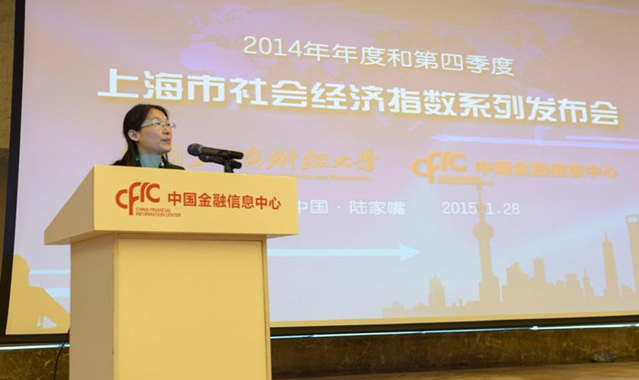
Associate Professor Cui Chang from the School of Statistics and Management at Shanghai University of Finance and Economics introduced the consumer confidence index and operational situation for Shanghai in the fourth quarter of 2014. According to the latest survey results from the Applied Statistics Research Center at Shanghai University of Finance and Economics, the consumer confidence index for Shanghai in the fourth quarter of 2014 was 117.6 points, an increase of 1.5 points month-on-month and an increase of 6.0 points year-on-year. Among them, the consumer evaluation index was 120.1 points, rising 3.0 points from the previous quarter and 7.4 points year-on-year. The consumer expectation index was 115.2 points, with a month-on-month increase of 0.1 points and a year-on-year increase of 4.6 points. All indices continued to rise in the fourth quarter of 2014, with the total index and several category indices reaching their highest points since the survey began. Throughout the year, the world economy in 2014 showed signs of bottoming out and stabilizing under the influence of the U.S. economic recovery. Meanwhile, China’s economy has gradually adapted to the "new normal," leading to a slowdown in Shanghai’s economic growth, but overall stability, which has bolstered consumer confidence in the city’s economic development situation this quarter.
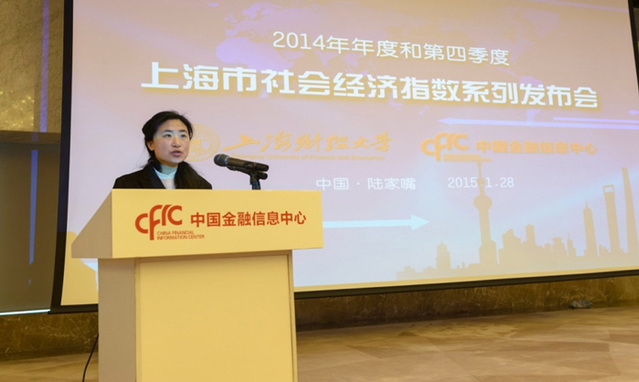
The Director of the Department of Economic Statistics, Associate Professor Chang Ning, representing the research team, presented the Investor Confidence Index and its operational situation for Shanghai in the fourth quarter of 2014. The Survey results conducted by the Applied Statistics Research Center of Shanghai University of Finance and Economics on business leaders or entrepreneurs, institutional investors, and individual investors show that the Investor Confidence Index for Shanghai University of Finance and Economics in the fourth quarter of 2014 was 118.68 points, a decrease of 3.45 points month-on-month and an increase of 8.84 points year-on-year. Although the index has decreased, it remains above the neutral value of 100 points, staying in the optimistic region, indicating an overall positive investor sentiment. The Investor Confidence Index for Shanghai consists of an index system that includes four core indices: the Investment Environment Confidence Index, the Entrepreneur Investment Confidence Index, the Institutional Investor Confidence Index, and the Individual Investor Confidence Index. Among them, the Investment Environment Confidence Index for Shanghai was 122.48 points, an increase of 1.67 points month-on-month and an increase of 2.12 points year-on-year. The index is in the optimistic range, showing that investors generally have a positive view of the investment environment; the Entrepreneur Investment Confidence Index for Shanghai was 122.95 points, unchanged month-on-month and an increase of 6.37 points year-on-year; the Institutional Investor Confidence Index for Shanghai was 121.61 points, a decrease of 7.83 points from the third quarter, but an increase of 14.24 points year-on-year; the Individual Investor Confidence Index for Shanghai was 106.84 points, a decrease of 8.55 points from the third quarter, but an increase of 13.69 points year-on-year. The national and Shanghai economy was generally stable in the fourth quarter, with a rebound in import and export growth, relatively abundant market liquidity, and the Shanghai Free Trade Zone becoming a new engine for "creating an upgraded version of the Chinese economy." These macro favorable factors have left the investor community in Shanghai relatively satisfied with the current investment environment, resulting in stable confidence. Additionally, this year, influenced by national policies such as streamlining administration and delegating power, enhancing social and economic vitality, and encouraging market innovation, the value added and profits of large-scale enterprises have seen weak rebounds, industrial structural adjustments are steadily advancing, and the momentum for transformation and upgrading is strong, making the entrepreneur community have a relatively optimistic view of the development of the real economy. Lastly, the recent market's ample liquidity and the strong rise in A-shares have greatly increased the satisfaction of institutional and individual investors regarding investments in this quarter. However, as the Shanghai Composite Index continues to hit new highs and data such as trading volume, the number of newly added A-share accounts, and margin financing and securities lending balances continuously set new records, both institutional and individual investors have shown concerns about future market trends, investment value, and investment risks.
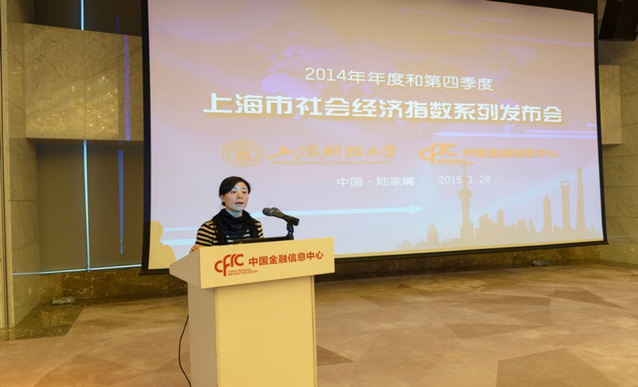
Professor Zhou Zhenhua, former Director of the Shanghai Development Research Center, President of the Shanghai Economic Society, and Vice Chairman of the Shanghai Federation of Social Sciences, interprets the Shanghai Socioeconomic Index Series. Professor Zhou analyzes that the Shanghai Consumer Satisfaction Index, Shanghai Consumer Confidence Index, and Shanghai Investor Confidence Index can reflect some new changes, characteristics, and future trends in the economic operation process. The Shanghai Consumer Satisfaction Index notably indicates the current transformation of Shanghai's economic operation, particularly the economic transition and structural adjustment. The trend of the Shanghai Consumer Satisfaction Index clearly reflects that the direction of Shanghai's innovation-driven transformation and development is entirely correct. More importantly, it also indicates that the path of Shanghai's innovation-driven transformation and development is stable. The value of the Shanghai Consumer Satisfaction Index is highly consistent with Shanghai's economic operation. For example, the rise in consumer satisfaction with transportation and communication services reflects changes in resident demand while also showing that the market supply and demand are well-matched. This underscores that Shanghai's economic development is undergoing a structural transformation, transitioning from the previous manufacturing economy to a service economy. However, the Shanghai Consumer Satisfaction Index also reveals some issues within the economic operation: although the direction of the economic transformation is correct and relatively stable, the market demand for internet services, medical services, and food safety is showing a rapid upward trend in the future economic transformation, yet consumer satisfaction in these areas has declined. This indicates that Shanghai’s economic transformation has not yet reached its destination and that there is still substantial room for transformation and development. The fluctuations in the Shanghai Consumer Confidence Index and Shanghai Investor Confidence Index suggest that Shanghai's economy is leading in the current context of slowing growth in both the Chinese economy and the global economy. Despite this backdrop, the values of the two indices have not shown significant volatility, indicating that Shanghai's economic operation has entered a new normal. Shanghai entered this new economic operation normality earlier than the national average. In the process of economic transformation and development, although the economic growth rate has slowed, Shanghai has achieved stable growth by cultivating new economic growth points to replace the old ones.
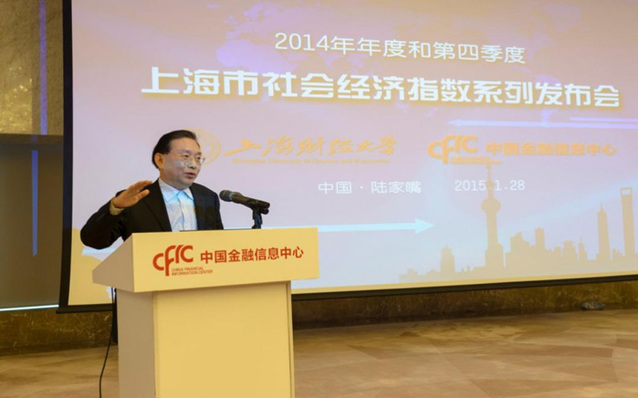
Professor Hu Yijian, Director of the Institute of Public Policy and Governance at Shanghai University of Finance and Economics, interprets the series of socio-economic indices in Shanghai. Professor Hu analyzes and points out that the satisfaction index and confidence index reflect the society's acceptance and the degree of economic growth. An increase in the indices indicates citizens' attitudes towards economic transformation and their expectations for development trends, also reflecting citizens' ability to accept the transitional period of the economy under the new normal. From the Shanghai Consumer Satisfaction Index, we find that citizens' satisfaction with services is lower than their satisfaction with products. Moreover, citizens are more satisfied with traditional products and less satisfied with new products. Overall, products are in a state of oversupply, while services are in a state of insufficient supply. Traditional products are in a situation of excess supply, with prices on a downward trend; new products are in a state of demand exceeding supply, with prices on an upward trend. Generally speaking, the satisfaction with product goods is somewhat higher than with service goods; low-income consumers are more sensitive to price. Professor Hu Yijian suggests that to improve Shanghai residents' life satisfaction, the following three points should be considered: first, increase residents' income levels, especially for low-income residents, which helps enhance life satisfaction; second, while promoting economic transformation, facilitate the transformation of supply and demand for products and services: provide products and services that adapt to changes in residents' consumption patterns, meeting their ever-growing demand; third, quality improvement is essential, especially in emerging products and services.
After the release of the 2014 annual and fourth quarter Shanghai social and economic index series, hundreds of online media, radio stations, and newspapers, including Xinhua News Agency, China News Service, People’s Daily Online, Shanghai Municipal Government website, Ministry of Commerce website, Phoenix Network, Wenhui Bao, Xinmin Evening News, Hong Kong Ta Kung Pao, and Shanghai Daily, made extensive coverage.