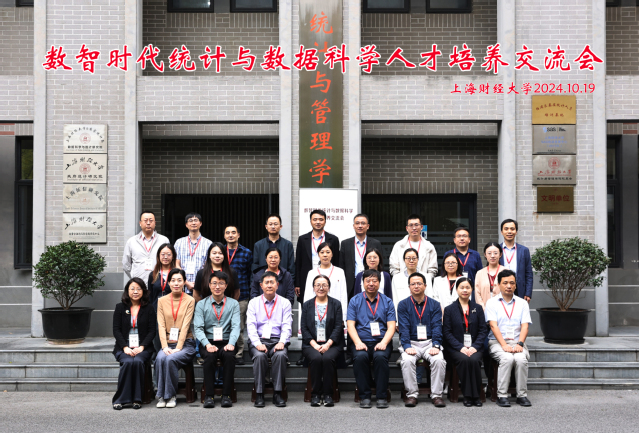
To promote the in-depth exchange of practices and experiences in the cultivation of statistical and data science talents and to jointly explore innovative and upgraded paths for talent training models, the "Statistical and Data Science Talent Cultivation Exchange Conference in the Era of Digital Intelligence," hosted by the School of Statistics and Management of Shanghai University of Finance and Economics, was successfully held on October 19, 2024. The conference was attended by prominent figures including: Fang Xiangzhong, Chairman of the Teaching Guidance Committee for Statistics Majors of the Ministry of Education and Vice President of the China Statistical Education Society, Professor of the School of Mathematical Sciences at Peking University; Wang Zhaojun, Executive Dean of the School of Statistics and Data Science at Nankai University; Yin Jianxin, Vice Dean of the School of Statistics at Renmin University of China; Zhou Yingchun, Vice Dean of the School of Statistics at East China Normal University; Zhong Wei, Professor at the Wang Yanan Institute for Economic Research and the School of Economics at Xiamen University; Pan Rui, Professor at the School of Statistics and Mathematics at Central University of Finance and Economics; Chen Yufen, Party Secretary of the School of Statistics and Mathematics at Zhejiang Gongshang University; Yang Hui, Party Secretary of the School of Statistics and Management at Shanghai University of Finance and Economics; Wu Chunjie, Deputy Director of the Academic Affairs Office at Shanghai University of Finance and Economics; Li Tao, Vice Dean of the School of Statistics and Management at Shanghai University of Finance and Economics; as well as nearly 20 experts and scholars from sister universities.
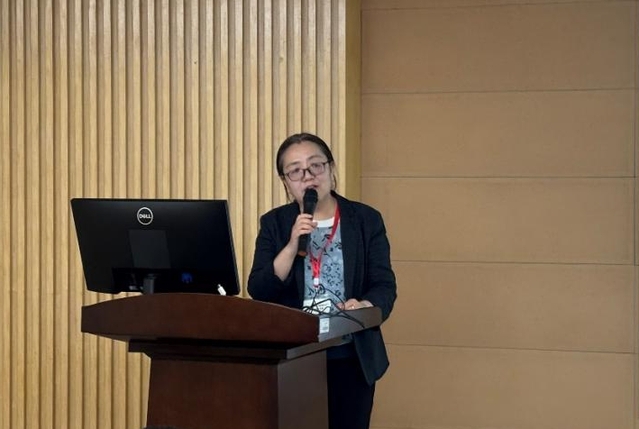
Yang Hui, the Secretary of the Party Committee of the School of Statistics and Management at Shanghai University of Finance and Economics, first warmly welcomed and sincerely thanked all the guests for their presence. She stated that with the widespread application of technologies such as big data and artificial intelligence, we are entering an unprecedented era of intelligent data. Statistics and data science, as core disciplines for deciphering data codes and exploring data value, are becoming increasingly important. It is hoped that this exchange meeting can jointly explore new ideas, new models, and new pathways for talent cultivation, to nurture more high-quality statistics and data science talents that meet the needs of the new era.
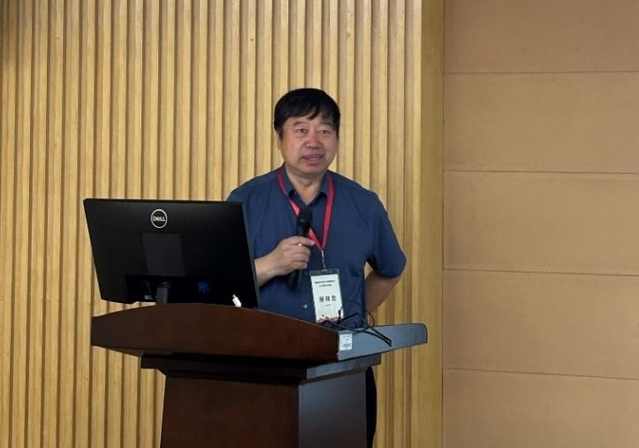
During the keynote speech session, Professor Fang Xiangzhong first presented a remarkable report titled "Concept of Coordinated Development for Statistics and Data Science Majors." He detailed the layout of new majors as outlined by the teaching guidance committee for statistics-related majors, as well as the division of fields and knowledge connections among various statistics disciplines, encouraging universities to actively apply for new majors based on their own discipline and professional development situations. He pointed out that statistics faces challenges in the new era, including the control of analytical method complexity, the diversity of data forms, and individual heterogeneity. He suggested diversifying the development of statistical education, strengthening the integration with knowledge from other fields, and expanding the influence of statistics.
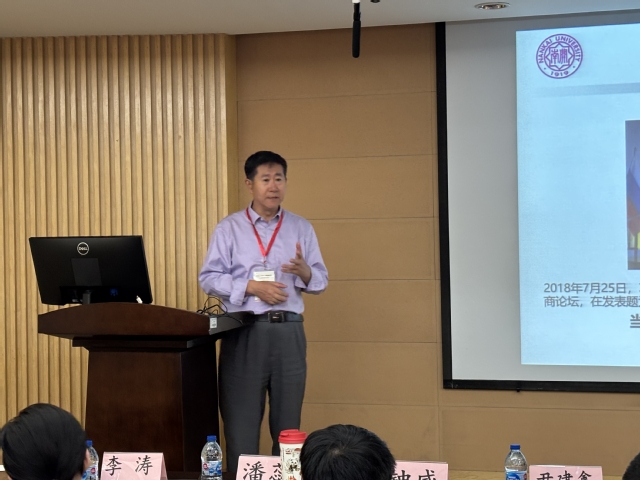
Professor Wang Zhaojun shared the philosophy and practice of nurturing statistical talent at Nankai University from two dimensions: subtle influence and teaching through fun. He specifically demonstrated how to deepen students' sense of national identity through Nankai's history and stories of predecessors, and how to enhance students' interest in learning using vivid cases of marriage status and mortality rates. He concluded by summarizing the need to cultivate more young talents capable of shouldering the responsibilities of the times through "mission + interest + role model" in a quietly influential manner.
Professor Wu Chunjie took the course "Mathematical Statistics" at Shanghai University of Finance and Economics as an example to introduce the teaching practice of ideological and political education in first-class courses. He detailed the development history of the course and introduced the path of ideological and political education in terms of three aspects: the teaching team as the "main force," course construction as the "main battlefield," and classroom teaching as the "main channel." He particularly showcased the achievements in aspects such as ideological and political education case studies, flipped classrooms, publication of results, and course honors.
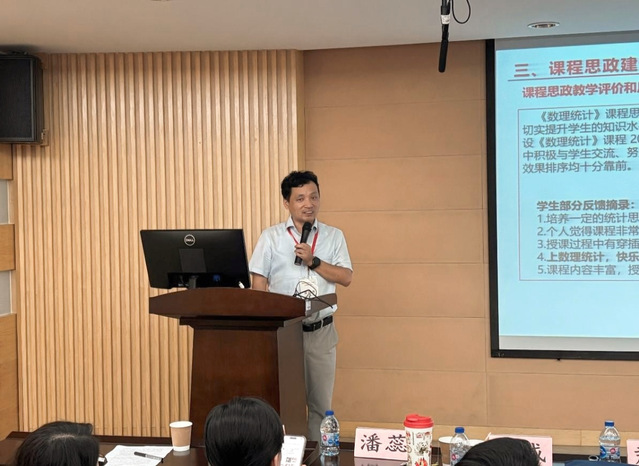
Professor Yin Jianxin's report is titled "An Initial Exploration of Constructing
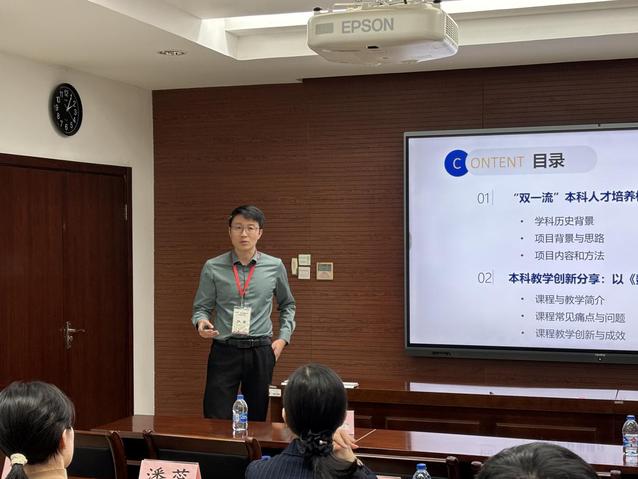
Professor Zhong Wei introduced the reform of the undergraduate talent training model and innovation in undergraduate teaching for Statistics and Data Science at Xiamen University. He proposed a reform approach of "strong foundation, promote intersection, and emphasize practice," and advanced this from aspects such as the setting of foundational and outstanding courses, and the construction of the student autonomous learning platform WISER CLUB Data Science Association. In addition, he also shared the teaching innovations and outcomes of the "Mathematical Statistics" course.
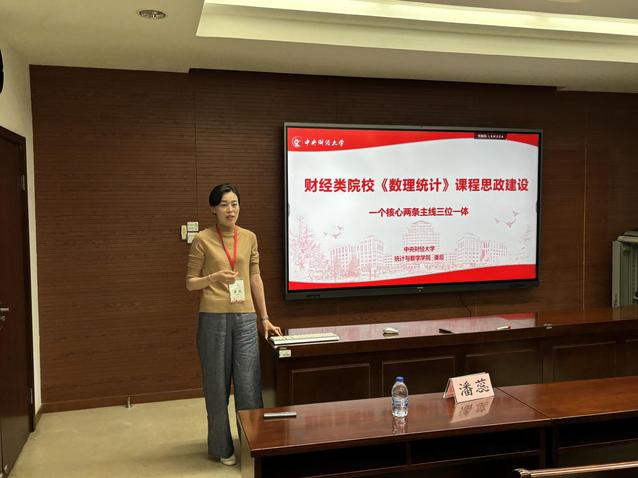
Professor Pan Rui shared her valuable experience in the ideological and political education of the course "Mathematical Statistics" at the Central University of Finance and Economics. In the process of constructing "one core, two main lines, and three-in-one", she particularly emphasized the importance of student-centered course content arrangement, the significant impact of teachers leading by example, and the important value of case studies in teaching.
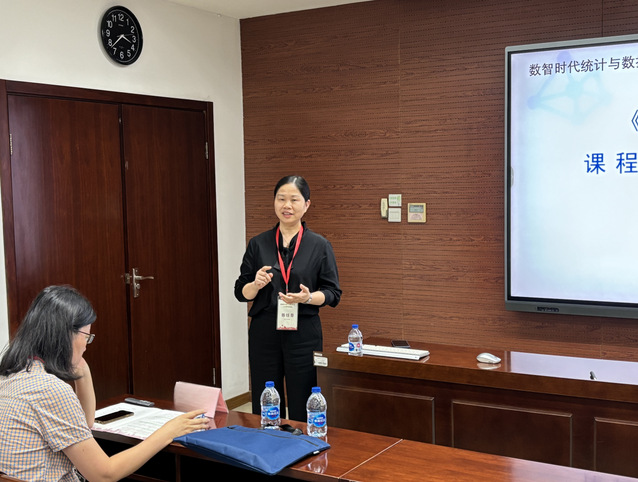
Professor Chen Yufen started from the practical problems and main dilemmas faced in talent cultivation, proposing a "1+4" CAMP capability cultivation system that aligns with social needs. She constructed a competency matrix integrating professional abilities and general abilities, exploring complementary cultivation paths between the first classroom and other curricular activities such as competition camps, training camps, academic camps, and expansion camps. She also specifically introduced distinctive initiatives such as the production of guided reading micro-videos, the "reading, writing, discussion, and application" teaching model, and the construction of AI courses for knowledge graphs.
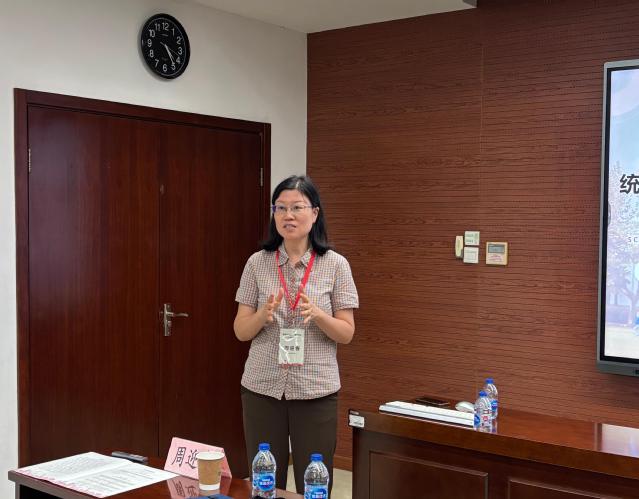
Professor Zhou Yingchun's report is titled "AI-Assisted Teaching and Ideological and Political Education Practices in Statistics Courses." Based on her practical experience, she introduced the progress of building AI teaching agents from aspects such as knowledge base analysis, training and optimization, and 24-hour intelligent learning companions. She also shared her thoughts on future developments in teaching operation data analysis and assignment design based on AI usage.
This exchange meeting conducted in-depth discussions and sharing on topics such as the professional development of statistics and data science, educational reform, ideological and political education in courses, and AI-enabled teaching. It promoted mutual learning and appreciation among different universities and provided valuable experience and guidance for jointly advancing the development of statistics and data science education, cultivating more top innovative talents that meet future demands.