On June 30, the School of Statistics and Data Science of Shanghai University of Finance and Economics, together with the Institute of Data Science and Statistics, the Shanghai Finance Branch Center of the Shanghai Social Survey Research Center, and the Chinese path to modernization Research Institute, successfully held a symposium on the application of generative AI in economic statistics and government statistics. The conference brings together experts from multiple fields including government, industry, academia, and research to explore feasible paths for AI enabled statistical intelligence transformation.
This seminar invited representatives from various levels of statistical authorities, government data agencies, higher education institutions, and financial technology enterprises to attend, including the Shanghai Municipal Bureau of Statistics, Shanghai Municipal Data Bureau, Shanghai Survey Team of the National Bureau of Statistics, Zhejiang Provincial Bureau of Statistics, Zhejiang Survey Team of the National Bureau of Statistics, Chongming District Bureau of Statistics, Sanming Development and Reform Commission (Municipal Data Management Bureau), as well as more than ten government and enterprise entities such as the AI Finance Development and Service Center of Shanghai University of Finance and Economics, Shanghai University of Technology, China UnionPay Financial Technology Research Institute, and Shanghai Southern Digital Data Technology Co., Ltd. The research team of the School of Statistics and Data Science at Shanghai University of Finance and Economics participated in the seminar throughout the entire process.
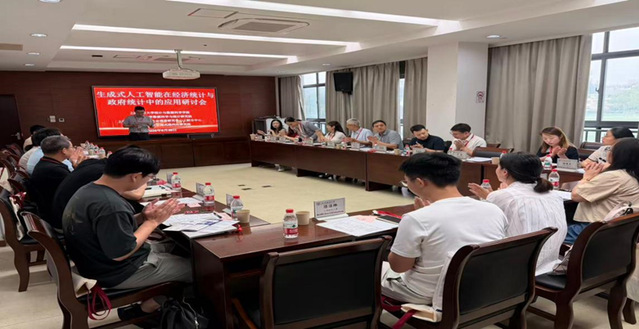
Yang Hui, Secretary of the Party Committee of the School of Statistics and Data Science at Shanghai University of Finance and Economics, delivered a welcome speech. She pointed out that relying on Shanghai University of Finance and Economics' profound accumulation in the field of statistics, we should effectively break down the barriers between "laboratory research - front-line statistical business - industrial application scenarios", and explore the formation of a generative artificial intelligence statistical application path that is in line with China's national conditions.
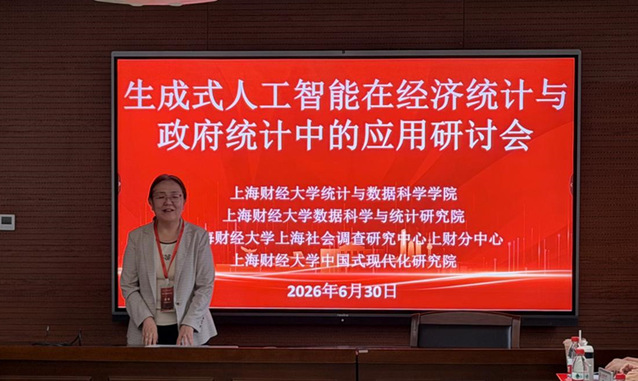
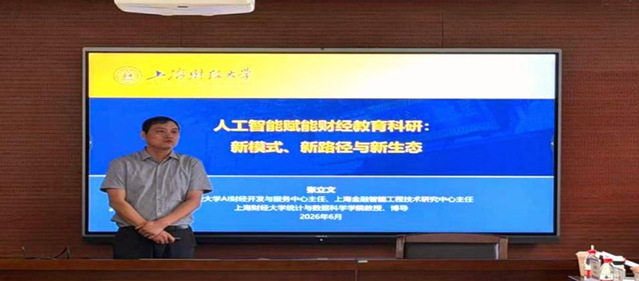
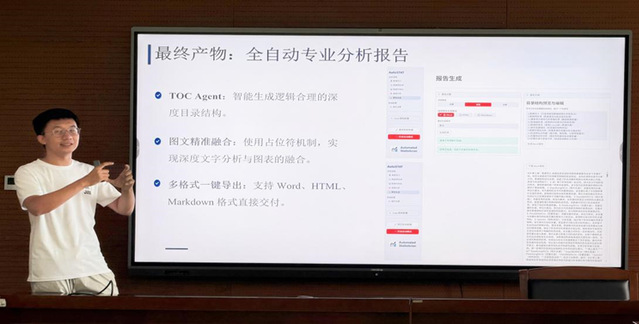
The three keynote speeches in the morning focused on viewpoints and frontiers, sharing the current cutting-edge exploration achievements of generative AI in the application field from three directions: vertical large-scale model full stack research and development, government digital transformation practice, and self-developed automated statistical tools, laying a theoretical and technical foundation for subsequent practical application research. Zhang Liwen, Director of the AI Finance Development and Service Center at Shanghai University of Finance and Economics, introduced the self-developed financial vertical model system of Shanghai University of Finance and Economics, shared the "Intelligent Adjustment Cloud Strategy" statistical survey model jointly developed with the Zhejiang Survey Team of the National Bureau of Statistics, and implemented the deployment of domestic computing power online. The project has completed the preliminary review of algorithm filing and is expected to be officially put into use from July to September. Guo Yiding, Director of the Institute of Social Governance Modernization at Shanghai Institute of Technology, proposed to use generative AI to integrate multi-source data and build an integrated supervision platform based on the digital practice of Hainan's efficient government (efficient agency), in order to solve the pain point of heavy burden of grassroots statistical verification; Teng Jiaye, a young teacher at the college, introduced his self-developed AutoStat automated statistical analysis tool, which solves the problem of "illusion" in general large models through standardized processes and multiple rounds of verification, and adapts to the requirements of confidential statistical data control.
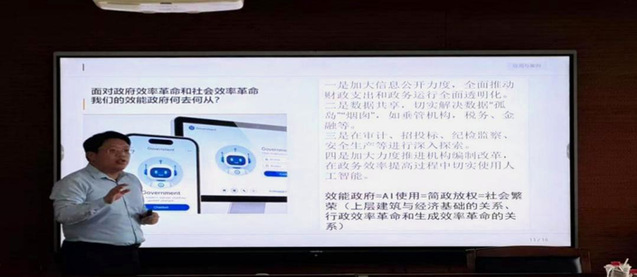
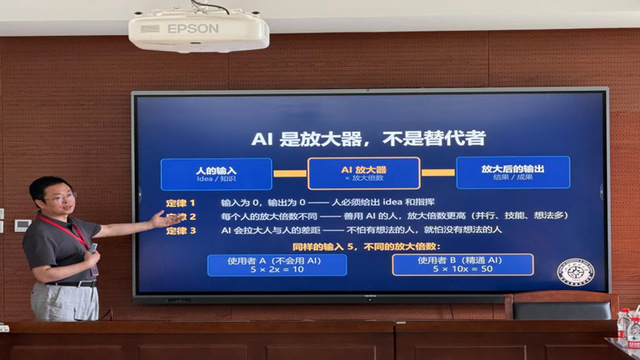
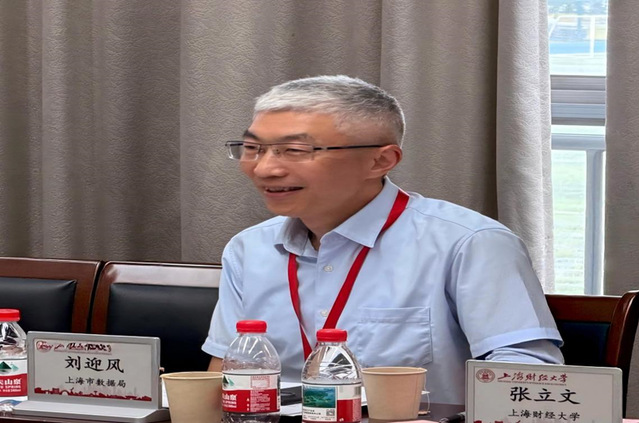
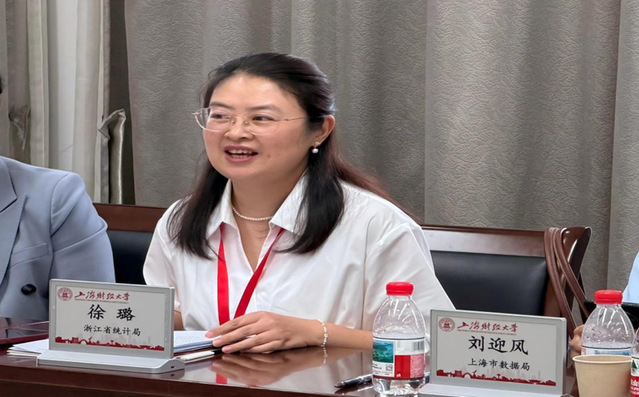
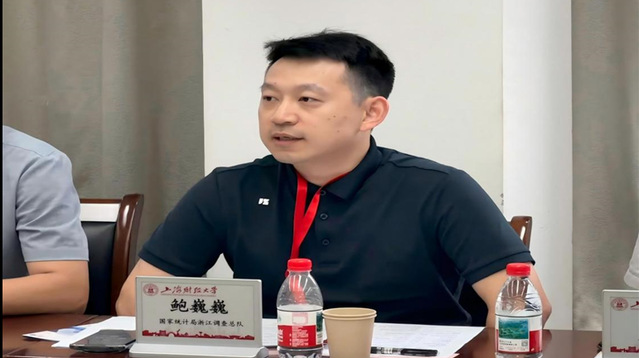
During the roundtable dialogue session, attending experts reached multiple consensuses around industry bottlenecks: Feng Xingdong, Dean of the School of Statistics and Data Science, proposed that AI is a capability amplifier, and professional knowledge reserves are the core of achievement quality; Liu Yingfeng, Chief Engineer of Shanghai Data Bureau, introduced the plan for Shanghai's government intelligence construction, proposing to jointly build an industry corpus knowledge base, jointly research standards for data quality and security governance, and jointly expand the application scenarios of government intelligence; Xu Lu, the chief statistician of Zhejiang Provincial Bureau of Statistics, introduced the pilot situation of AI multi statistical scenarios in the province, pointing out the problems of scattered computing power resources and redundant construction of existing models, and suggested that the application of artificial intelligence should strengthen overall planning. Bao Weiwei, Director of the Big Data Planning and Construction Department of the Zhejiang Survey Team of the National Bureau of Statistics, combined with the research and development practice of the "Intelligent Adjustment Cloud Strategy" statistical industry vertical domain big language model, summarized the four core advantages of the statistical vertical private big model, sorted out the three major obstacles of demand conversion gap, the contradiction between big model uncertainty and government statistical zero fault tolerance requirements, and the lack of industry credibility in secure sharing technology. He called for the improvement of the normalized training mechanism for statistical cadres' AI tool application ability. Industry representatives shared their practical implementation experience by combining financial risk control, statistical research, and full chain AI landing scenarios.
The afternoon symposium focused on specific scenarios and practices of AI applications. The Economic Statistics Big Model Research Team of the School of Statistics and Data Science at Shanghai University of Finance and Economics demonstrated the latest progress and practical application effects of their self-developed EcoStat intelligent statistical reporting tool on site, based on real-life statistical test cases. Representatives from government departments, academic experts, and business representatives participated in in-depth and practical exchanges and discussions on tool optimization based on their respective business scenarios.
Contribution | Wang Junhao (Student)
Image provided | Fu Muyuan (Xue)
Editor in Chief | Feng Xingdong