Borrow My New "Silk" Road
——School of Statistics and Management Summer Rural Outreach "Visiting the China-Myanmar Border City, Exploring the Cloud Silk Road" Practice Activity Diary
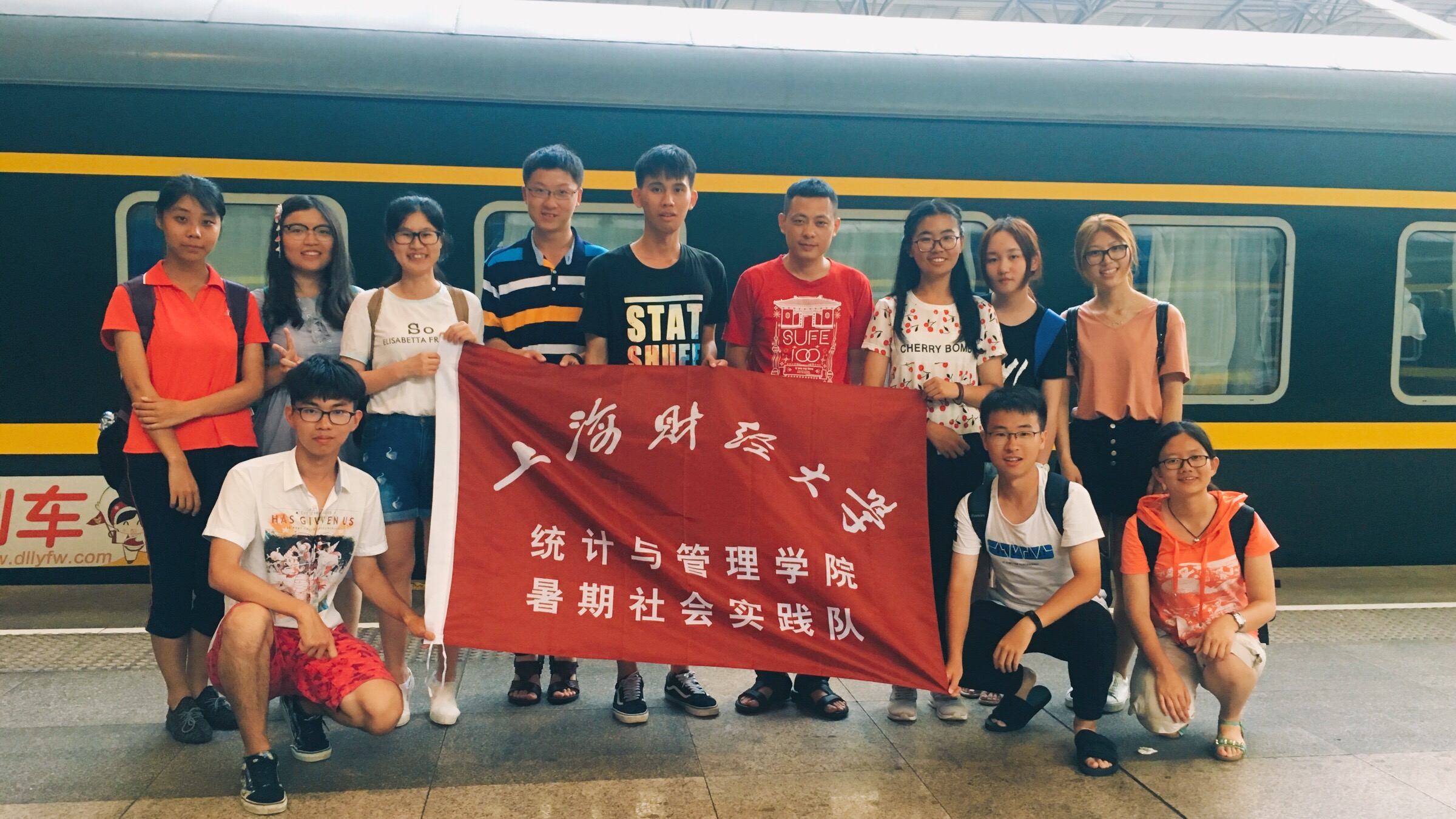
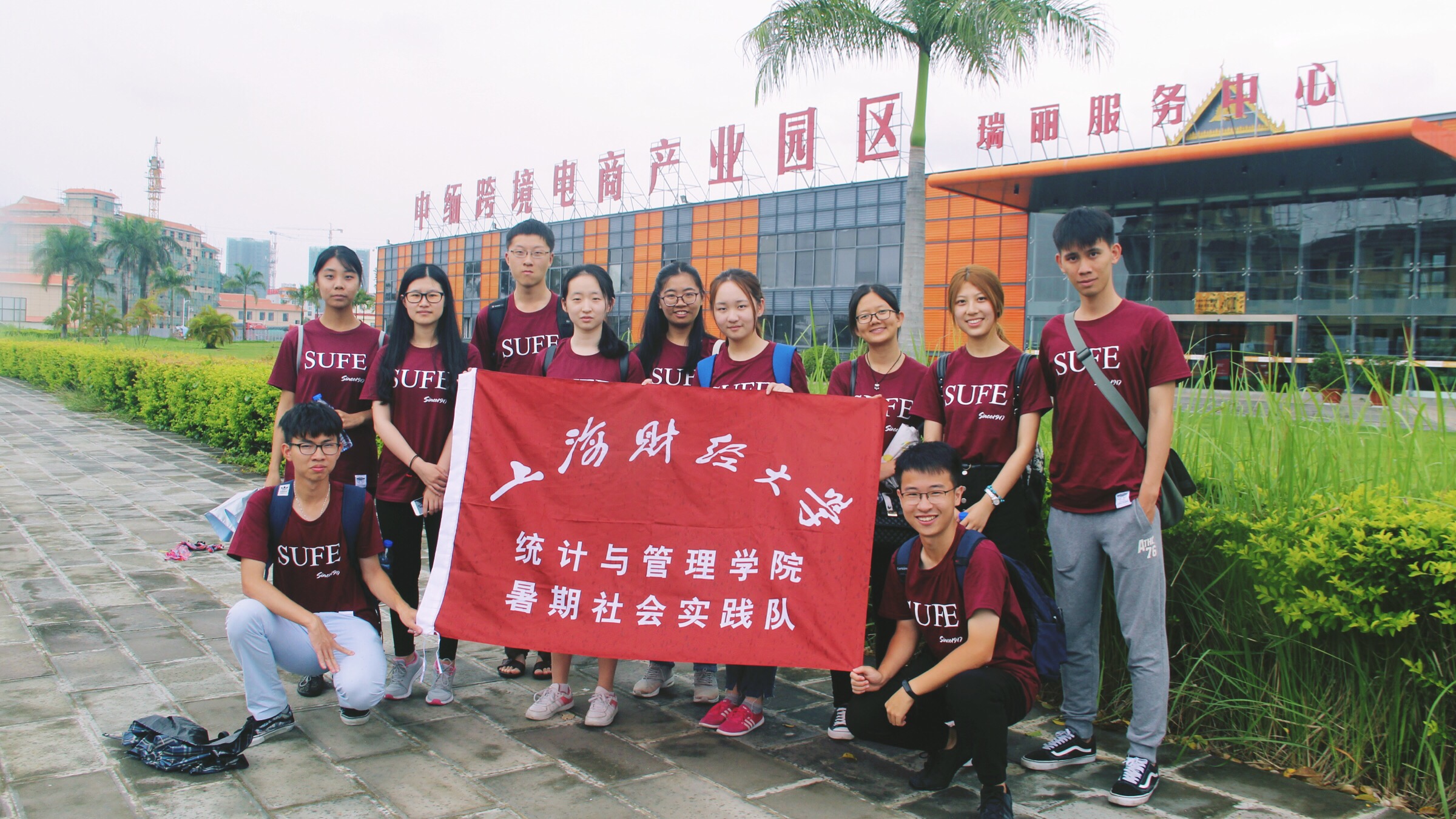
From July 4th to July 12th, the summer "Going to the Countryside" practice team from the School of Statistics and Management of our university, after more than 50 hours of long travel, arrived in Ruili City, Dehong Dai and Jingpo Autonomous Prefecture, Yunnan Province to carry out a one-week research and practice activity titled "Visiting the Border City of China and Myanmar, Exploring the Cloud Silk Road." During the week, the practice team conducted comprehensive research and outreach on the current status of cross-border e-commerce development in Ruili City from different perspectives, including enterprises, residents, schools, and government, under the backdrop of the "Belt and Road" initiative. In this border city located at the southwest end of our motherland, they embraced hope and expectations, contributing their strength to the development of the "Belt and Road."
On the 4th at 3 PM, a team of 10 students from the School of Statistics and Management, including Xia Wenjia, Zheng Wenhao, Yuan Zhaoying, Guo Yifei, Yuan Kanghong, Ma Mengxue, Li Like, Song Lijuan, and others, led by their instructor, rushed from the school to Shanghai South Station. They took a 36-hour train to Kunming, then transferred to a bus for another 12 hours, arriving at their practical training site—Ruili City in the Dehong Dai and Jingpo Autonomous Prefecture, located on the China-Myanmar border. Upon arriving in Ruili, it was already past 9 PM on July 6th. Perhaps it was the fresh air of the Yunnan-Guizhou Plateau that dispelled the students' travel fatigue; they immediately started preparing for the company visits scheduled for the next day.
On July 7, the first day of the survey, the practice team went to Daitong Company, a 4A enterprise engaged in cross-border e-commerce in Ruili City, to understand the opportunities, bottlenecks, and new development ideas of cross-border e-commerce under the background of the “Belt and Road” initiative. The group was warmly received by Daitong Company. The staff gave a detailed explanation of Daitong Company's business scope in Myanmar and China and led the team to tour the company, showcasing its products. Subsequently, the company's leadership met with the practice team and held a discussion. During the discussion, the leaders of Daitong Company emphasized, "When Daitong Company decided to engage in cross-border e-commerce and take on the cross-border e-commerce industrial park project, it was, in fact, a responsibility and a commitment. If we do not do it, other private enterprises will come in, but the consequence of that is that the data and information will belong to them and not to Ruili." This made the practice team deeply understand the efforts and responsibilities that Daitong Company has undertaken in the development of e-commerce. An individual or a company can only secure a place amid the changing tides by integrating their development with national development, utilizing relevant national policies more fully, and closely linking their corporate dreams with the Chinese dream, sharing both fortunes and misfortunes for mutual development. In random interviews with the company staff, the team also learned that after the Belt and Road strategy was proposed, the treatment of company employees has improved, and the company's scale has further developed.
On the second and third days of the research, the practice team, after understanding the development status of leading cross-border e-commerce enterprises, conducted street interviews with individual operators and local residents. On July 8, the research team focused on interviewing farmers around the agricultural wholesale market to understand their attitudes towards joining e-commerce under the backdrop of the local government's strong promotion of e-commerce. The research found that as a relatively underdeveloped border city, the penetration of electronic payments in Ruili City is high. However, local residents do not have a strong willingness to use online payments. On July 9, the team mainly visited individual business operators. The team split into three groups, departing from three different directions to conduct surveys on street-side individual businesses, covering almost the entirety of Ruili City, with subjects from various industries. The interviews revealed that a mindset of "content with a small fortune" prevails among most individual business operators. Most individual merchants hold a wait-and-see attitude towards e-commerce, especially cross-border e-commerce. Therefore, the practice team thoroughly introduced to the merchants the development trends of "Internet +" and the development strategy of the "Belt and Road," hoping they could seize opportunities, refuse to be mediocre, and pursue better, faster, and superior development to boost the overall economic benefits of Ruili.
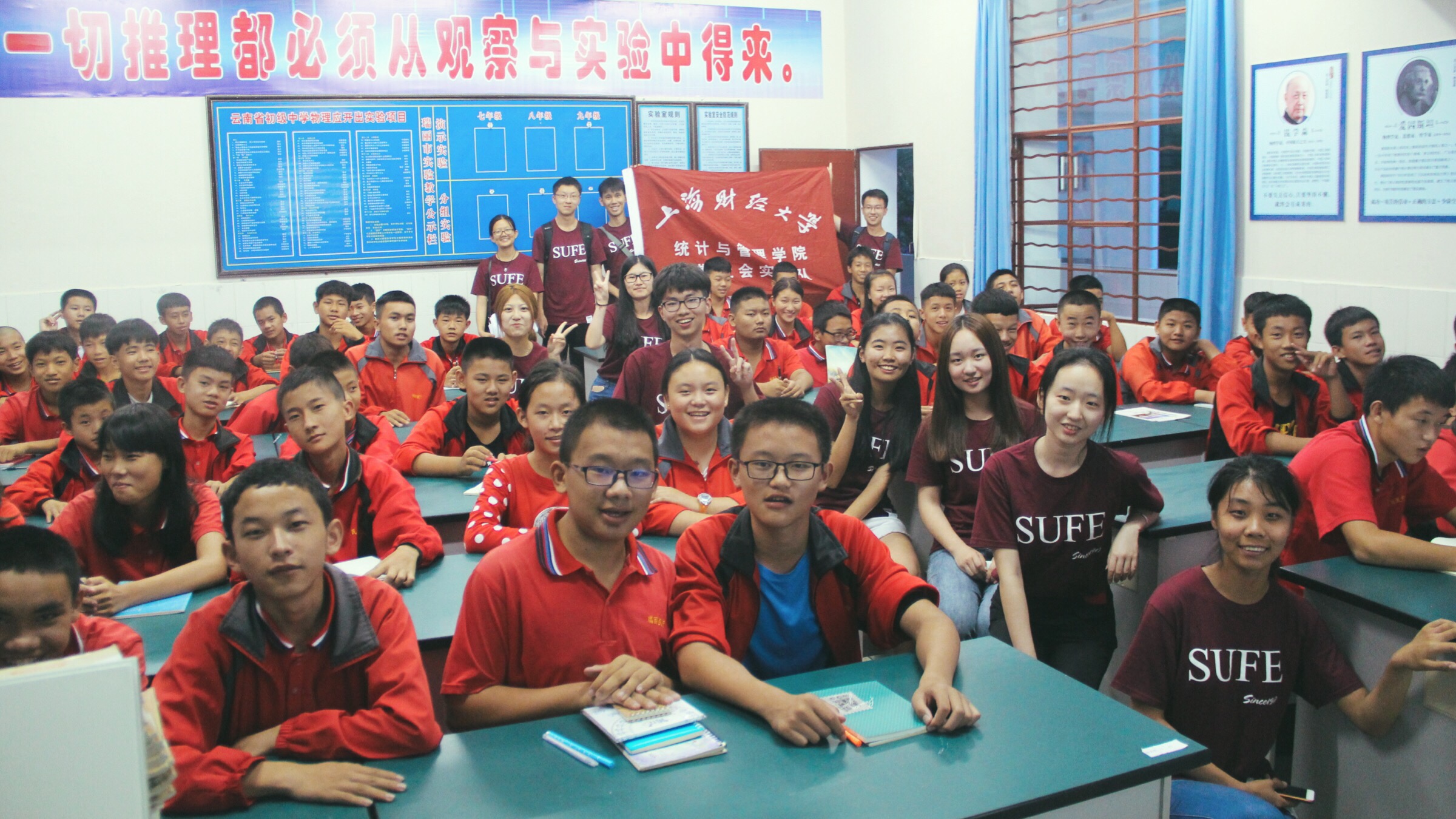
On July 10th, the fourth day of the research, the team members arrived at Ruili Ethnic High School to give a presentation on the national "Belt and Road" development strategy theme course. In the presentation, the team members not only combined the development of cross-border e-commerce in Ruili, but also included an interactive experience of mobile payment, which was warmly welcomed by the local students. Through communication and interaction with the local high school students, the team members also learned about the situation of mobile payment and online transactions among the students here, as well as their understanding of the policies related to the "Belt and Road" initiative. What left a deep impression on the team members was the innocence and cuteness of the children here, and the spark of curiosity in their eyes. They long for the knowledge we bring them beyond the classroom and wish to engage with cutting-edge technology. The team members hope that their arrival can bring fresher ideas to the children, help them understand the national development strategy, and enable them to see further and go further.
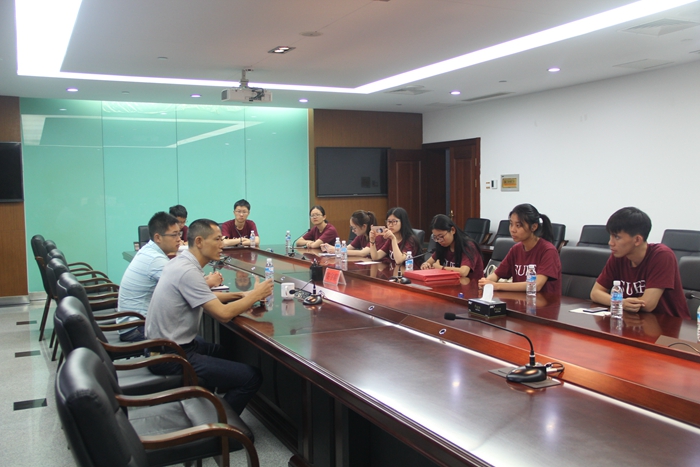
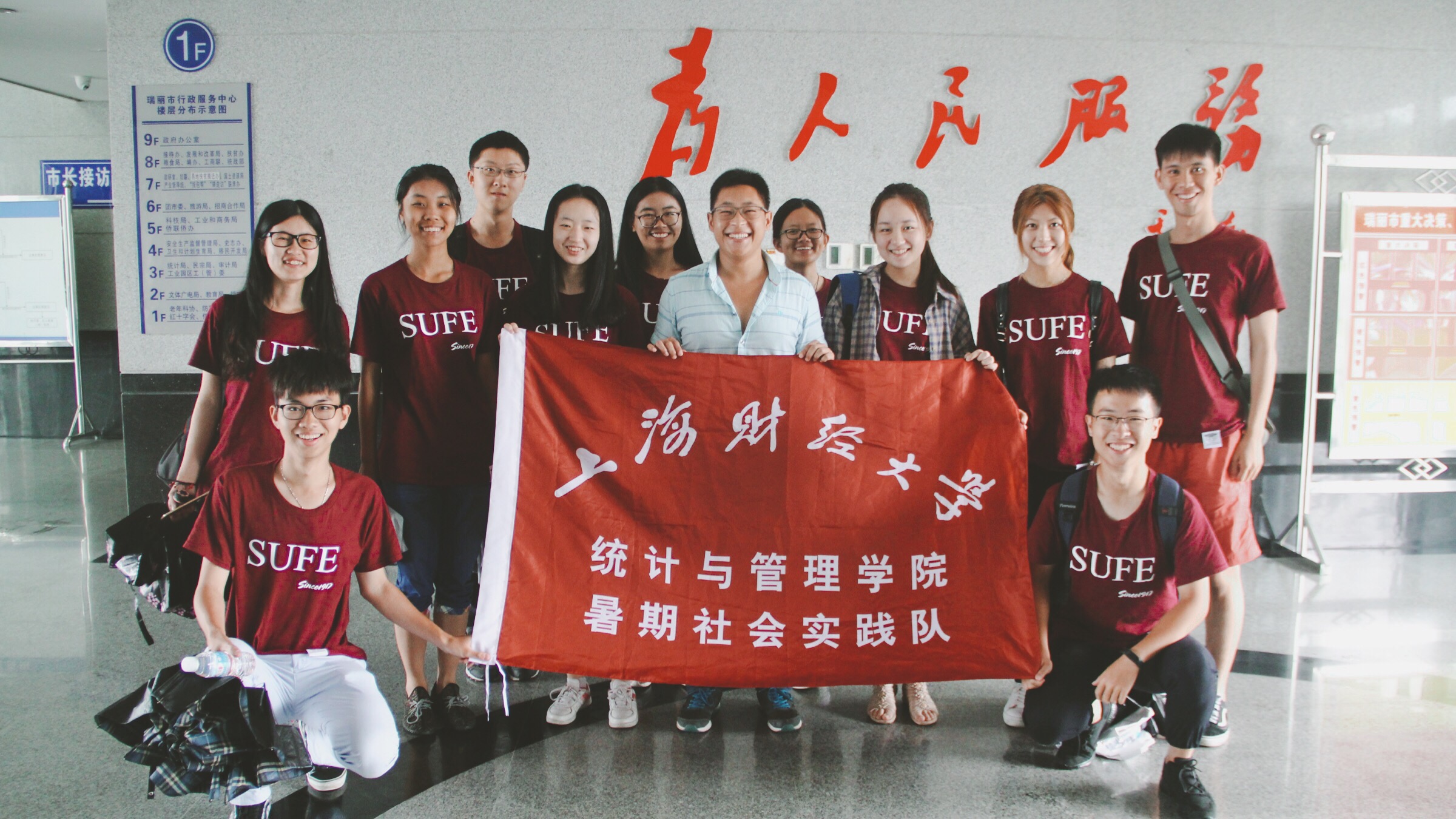
On July 11, the last day of the research, the practice team visited the Ruili City Government and was received by the Vice Mayor of Ruili City. The city leaders welcomed the students' arrival and provided detailed information about the policy support given by the country to Ruili under the "Belt and Road" initiative, as well as the efforts made by the Ruili City Government in this context. This allowed the team members to re-evaluate the beautiful border town of Ruili from a broader perspective. Ruili City has rich natural resources, providing capital for the development of distinctive and competitive e-commerce; moreover, Ruili is located on the China-Myanmar border, with an extraordinary geographical position, positioned to become "Shenzhen of Yunnan Province," which is of great significance to the "Belt and Road" development strategy. Additionally, the unique historical background and cultural environment provide favorable conditions for Ruili City in China-Myanmar exchanges and cooperation. However, in the further development of Ruili City, difficulties that urgently need to be addressed, such as currency issues and transportation problems, have also been encountered.
"Openness brings progress, while closure leads to backwardness." This applies to countries, to cities, and to enterprises. On July 12, the members of the practice team about to leave Ruili City believe that under the background of the "Belt and Road Initiative," Ruili City will surely leverage the new "Silk Road" to promote new development and welcome a day when "all roads are connected, and all are in harmony."
Contributor: Yuan Zhaoying (Xue) Yao Liming
Provided by: Guo Yifei