---Machine translation, moving from the laboratory to commercial applications
On the afternoon of March 17, 2020, Dr. Zhang Yuqi, a senior algorithm expert at Alibaba Damo Institute, was invited to our institute to give a lecture on the industry forum with the theme of "Machine Translation, Moving from the Laboratory to Commercial Applications". Dr. Zhang Yuqi graduated from the Department of Computer Science at Tsinghua University and obtained a Ph.D. in Pattern Recognition from the Department of Computer Science at RWTH Aachen University in Germany. Currently responsible for interactive machine translation and machine translation dataset algorithm work. I have worked at Karlsruhe University in Germany and SAP company, responsible for research and implementation of machine translation related technologies.
Firstly, Dr. Zhang Yuqi introduced the development of artificial intelligence (AI). Artificial intelligence was actually proposed a long time ago, and with the invention of computers in 1946, the idea of using machines to simulate humans also emerged. Afterwards, artificial intelligence reached three peaks: in the 1850s, linear problems could be solved by simulating single-layer neurons; In the 1880s, partial nonlinear problems could be solved through multi-layer neural models; After 2010, deep learning flourished by utilizing complex neural networks to solve problems. There are two important factors in the current development of AI technology: rich data and powerful computing power. With the era of big data and the continuous development of computer hardware, AI technology will inevitably become increasingly mature.
Subsequently, Dr. Zhang Yuqi introduced the development process of machine translation with a simple example. As early as 1933, machine translation had already emerged. In the 1850s, the first machine translation from Russian to English was achieved; In the mid-1980s, linguists used substitution methods for machine translation work; In the 1890s, machine translation (SMT) based on statistical models emerged; After 2013, deep model-based machine translation (NMT) became mainstream. This method no longer interrupts words and phrases, but adopts an end-to-end translation process, which greatly utilizes contextual information and has the advantages of fewer mistranslations, high fluency, and grammatical consistency.
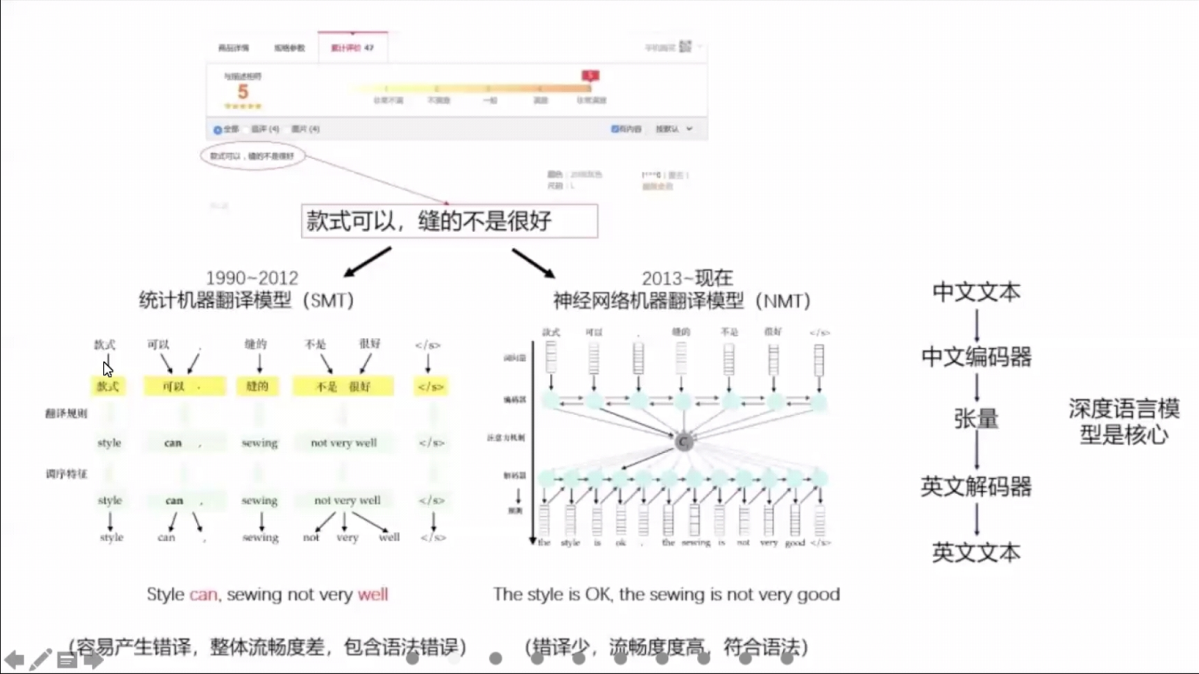
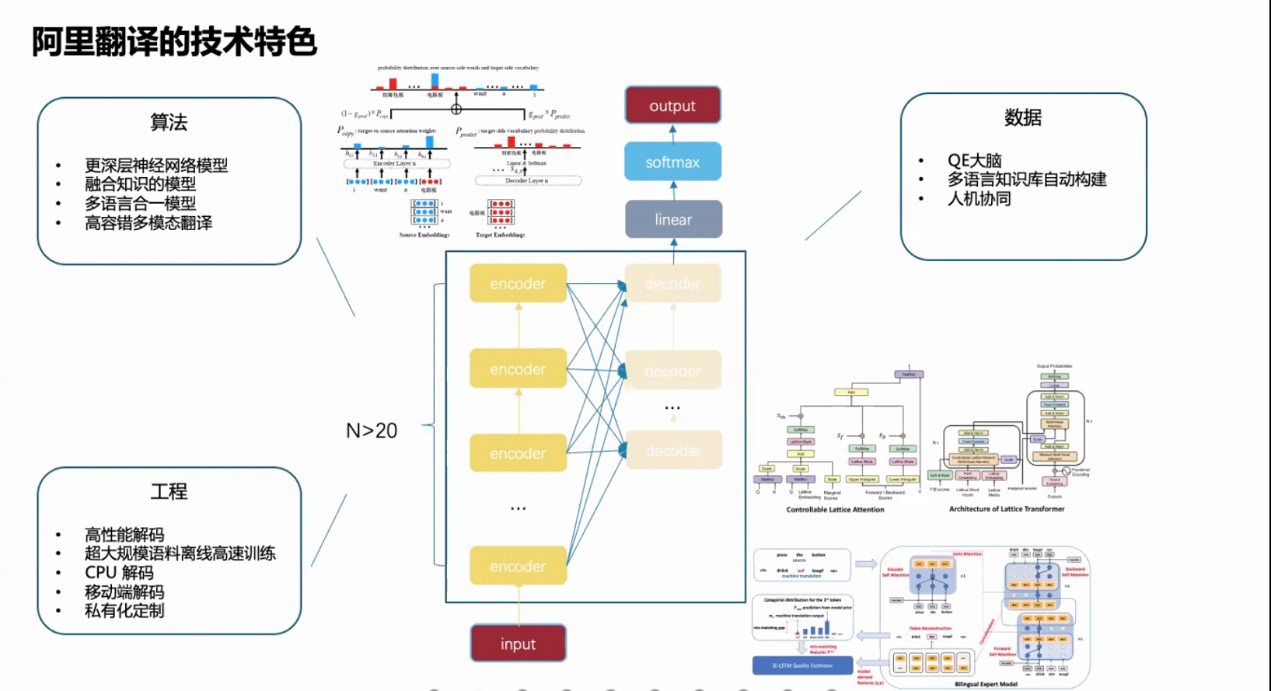
Afterwards, Dr. Zhang Yuqi introduced us to the application of machine translation in Alibaba Group. Its translation team supports all translation services of the group, serving millions of cross-border merchants and tens of millions of overseas consumers every day, with the goal of "making business language barrier free. Dr. Zhang Yuqi also used cross-border e-commerce as an example to introduce the role and significance of translation in various aspects, and explained the differences in translation requirements in different scenarios of e-commerce translation applications.
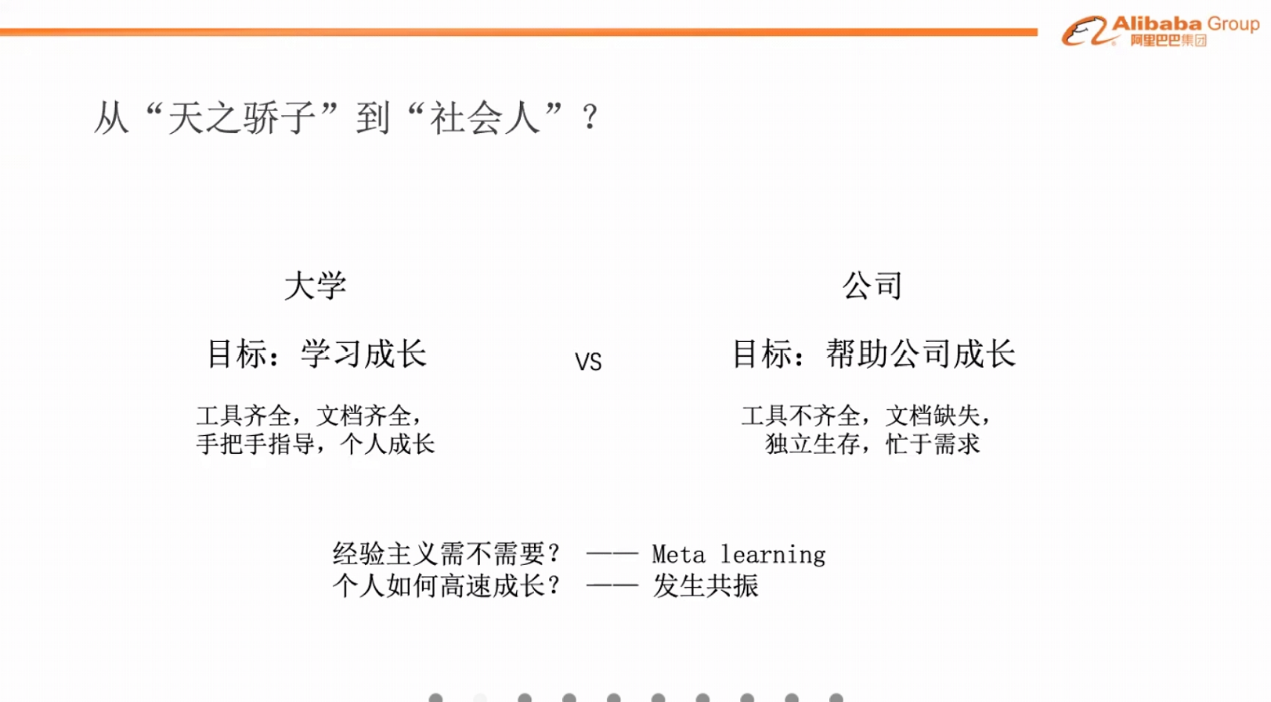
Finally, Dr. Zhang Yuqi shared with us the different requirements of universities and companies for individuals based on her personal learning and work experience, and provided several suggestions, emphasizing that we should focus on cultivating our thinking, hands-on, and learning abilities, timely recognize the transformation of our identity, and achieve personal leaps while helping the company grow.
During the interactive questioning session, Dr. Zhang Yuqi patiently answered the questions from the classmates. Firstly, Dr. Zhang Yuqi answered the technical requirements for students in machine translation related positions, mainly including understanding of deep learning algorithms, data mining skills, and hands-on abilities. Then, some students were very interested in the daily work and teamwork of algorithm engineers. Dr. Zhang Yuqi answered questions on three aspects: technical direction, business problems, and personal growth, including establishing new algorithm models, improving algorithm models, applying models to practical business, and cultivating teamwork and thinking abilities through personal work processes. Dr. Zhang Yuqi also answered the importance of statistical and mathematical foundations in the practical application of machine learning in the industry. Finally, Dr. Zhang Yuqi expressed her views on the topic raised by her classmates about whether machine translation can replace human translation in the future.
At this industry forum, Dr. Zhang Yuqi gave a detailed explanation of the development of artificial intelligence and machine translation technology, as well as their application on Alibaba. Students expressed that they had gained a lot, gained a better understanding of machine translation, broadened their horizons, and had a clearer concept of the differences between the industry and schools. It also has great guiding significance for future learning and employment directions.