---The application of options in the over-the-counter market
On September 29, 2020, Xu Hong, an options analyst at Xingye Trading, was invited to our institute to give a lecture on the theme of "The Application of Options in the Off exchange Market" at an industry forum. Mr. Xu Hong graduated from Nanyang Technological University with a major in finance. He joined Xingye Trading in 2018 and mainly engages in research on commodity futures and options, as well as sales and trading management. In this forum, Mr. Xu Hong mainly explained the main business of over-the-counter options, trading models, the "insurance+futures" business of bank futures cooperation, and structured products of bank futures cooperation.
Firstly, Mr. Xu Hong introduced the definition of over-the-counter derivatives, the difference between over-the-counter derivatives and over-the-counter derivatives, and the relationship between futures risk management subsidiaries and over-the-counter derivative clients. The focus is on introducing over-the-counter options and their applications in business operations. Then, some options business models and interaction processes in cooperation with insurance companies and banks were introduced, as well as innovative attempts to apply blockchain technology to current transaction models, demonstrating the system architecture of blockchain deployment to everyone.
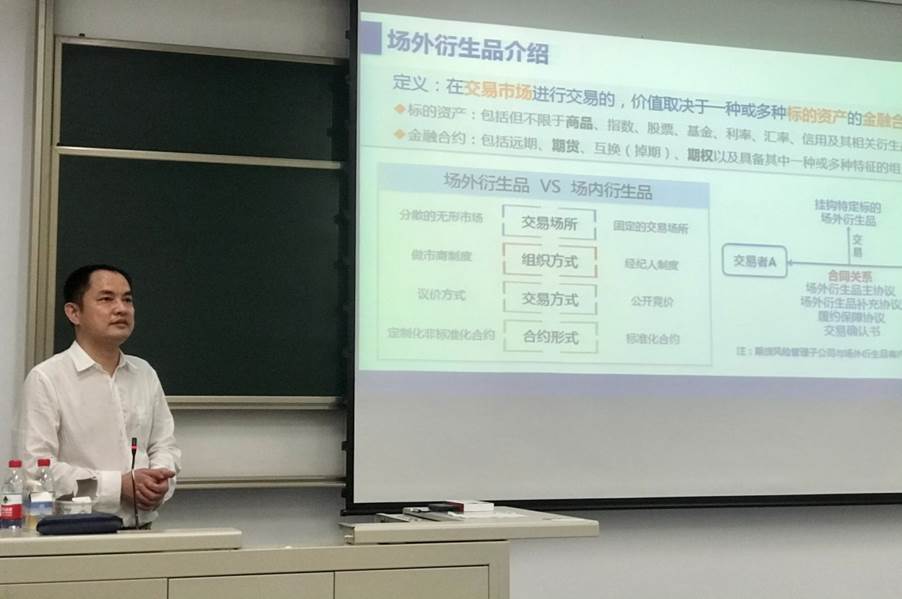
Next, Mr. Xu Hong introduced the "insurance+futures" business of bank futures cooperation from four aspects: service mode, special support, business significance, and promotion plan. From the perspective of operation mode, farmers face risks such as falling crop prices and are unable to directly participate in the on exchange futures and options markets due to lack of professionalism and funding. However, farmers can ensure their income through insurance. Futures companies and insurance companies design insurance products based on the crop cycle of farmers to insure crop prices, and insurance companies and futures companies purchase put options to reinsure the sold price insurance. Mr. Xu Hong also listed the corresponding three major exchange listed futures varieties and premium sources that he focuses on.
In addition, Mr. Xu Hong introduced structured products, main product types and features, and revenue analysis of structured products. We gained a lot from being introduced to the over-the-counter options business model and products in a simple and understandable way, as well as the innovative integration with the popular blockchain model.
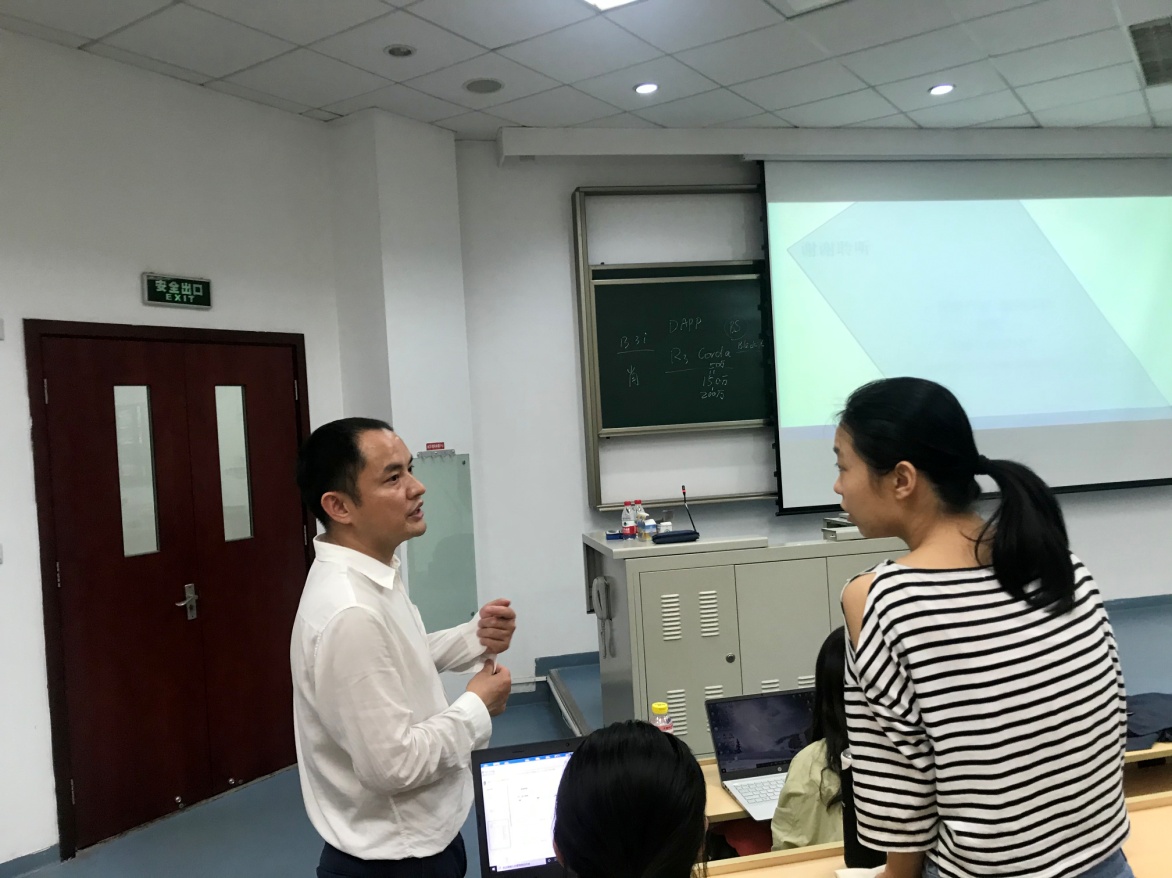
In the questioning session, Mr. Xu Hong answered the question raised by classmates on how to use blockchain technology to innovate transaction models. He explained the characteristics of blockchain: "Blockchain is a decentralized distributed ledger database. The ledger records one or more account asset changes and transaction situations, and is actually the simplest database structure." Taking online shopping transactions as an example, he explained that the difference between transaction models supported by blockchain technology and traditional transaction models is that blockchain technology can ensure that every transaction is transparent, traceable, and difficult to tamper with.
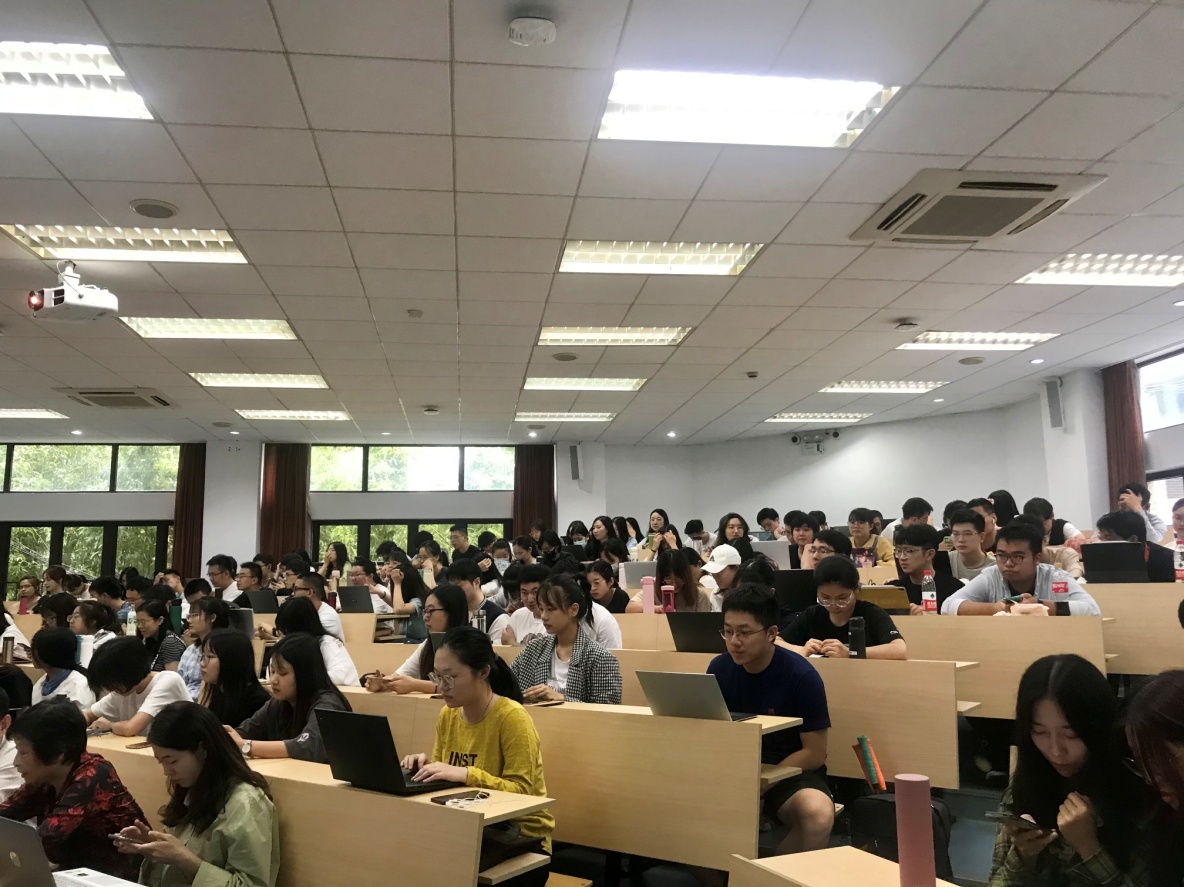
For the questions of the other three students, Mr. Xu Hong also answered them carefully one by one. The lecture was full of practical knowledge and rich examples, and the entire audience was packed. Finally, the industry forum came to a successful conclusion with applause.
Image provided by: Hu Yiyin
Contributors: Fu Xinlan, Zhu Chaona, Fang Jie