On September 24, 2024, our institution invited Mr. Wu Wanhua, the Managing Director of the Asset Management Investment Department of Shanghai SIPG Securities, to conduct a lecture on the theme of "Practical Asset Management Business of Securities Companies".
In recent years, with the rapid growth of the Chinese economy and the accumulation of personal wealth, asset management has become a highly concerned field. Teacher Wu first defined the concept of asset management and its business scope. Narrowly defined asset management refers to financial services provided by banks, trusts, securities, funds, futures, insurance asset management institutions, financial asset investment companies, and other financial institutions that accept investor commissions to invest and manage the assets of entrusted investors. Subsequently, Teacher Wu conducted role analysis on the three elements of asset management: principal, manager, and custodian, and analyzed China's private wealth report. The China Private Wealth Report predicts that by 2024, the size of individual investable assets can reach 327 trillion yuan, covering various investment methods such as insurance (life insurance), bank wealth management, cash and deposits. Faced with the increasing market demand, China's wealth market system includes bank wealth management, trusts, funds, etc., among which bank wealth management currently dominates.
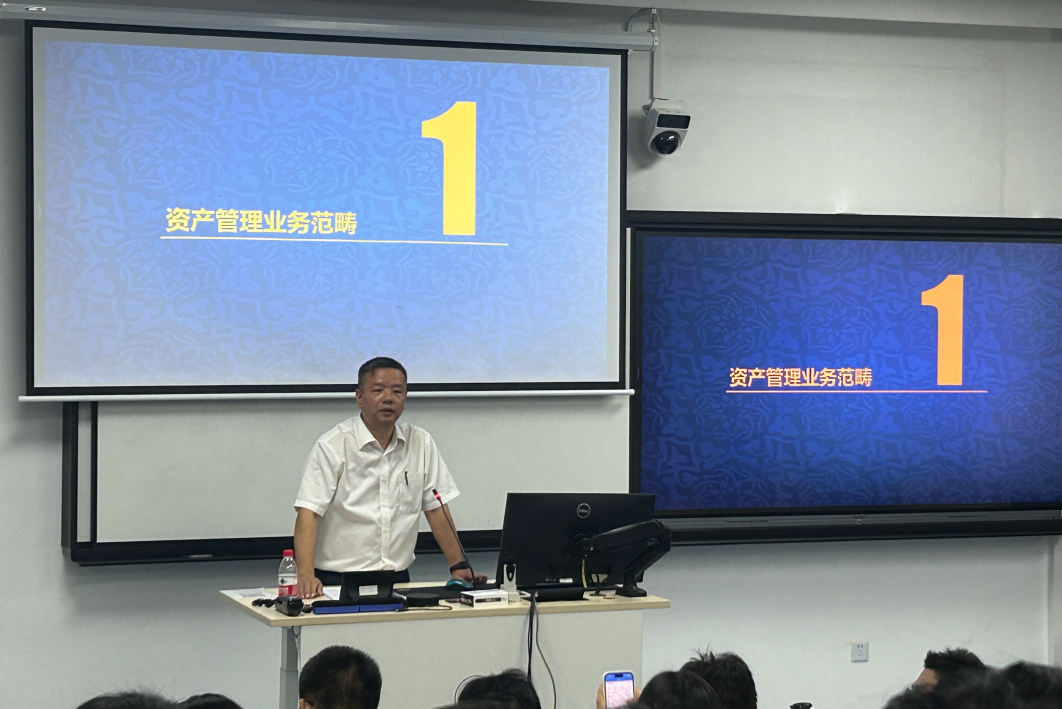
Secondly, Teacher Wu provided an overview of the development history of asset management business in securities companies. With the rapid development of the market, the government has strengthened its supervision of the asset management industry, clarified the direction of industry governance through the introduction of new regulations, and encouraged financial institutions to adjust and transform their business models. However, the market still needs to balance the relationship between innovation and risk control, and the asset management industry is also facing issues such as how to adapt to market changes and improve service quality. In addition, Teacher Wu discussed the investment targets of asset management business, including fixed income, equity, commodity and financial derivatives, and hybrid products. He emphasized the importance of market supervision and the diversity of information disclosure, and distinguished between standardized and non standardized asset management business.
In addition, Teacher Wu also focused on explaining the fundraising of asset management businesses, including the definition of qualified investors, the differences between public and private fundraising methods, and the division of single and collective asset management businesses. Among them, Teacher Wu paid special attention to the standardized investment operation of public funds, the calculation method of performance management fees, and the single asset plan and channel business. Teacher Wu also discussed the design and operation of structured products, how to use specific products to ensure returns, and the importance of risk management and optimization strategies for different investment projects.
Teacher Wu discussed stock valuation and analyzed and compared the characteristics of five stock valuation methods in their usage scenarios. Among them, the teacher pointed out that investment opportunities in the technology field, especially emerging enterprises and innovative drug directions, can be focused on. In addition, the teacher mentioned that the fund of funds (FoF) is a type of fund that specifically invests in other investment funds, and investing in this fund requires strong asset allocation capabilities and a foundation in data technology.
Finally, Teacher Wu elaborated on the management and exit of private equity securities assets. The teacher outlined the definitions and contents of the four stages of asset management business: management, monitoring, liquidity management, and liquidation; Emphasis was placed on post investment management, during which the four principles of comprehensiveness, prudence, supervision, and efficiency should be followed, and attention should be paid to risk compliance monitoring and value-added services.
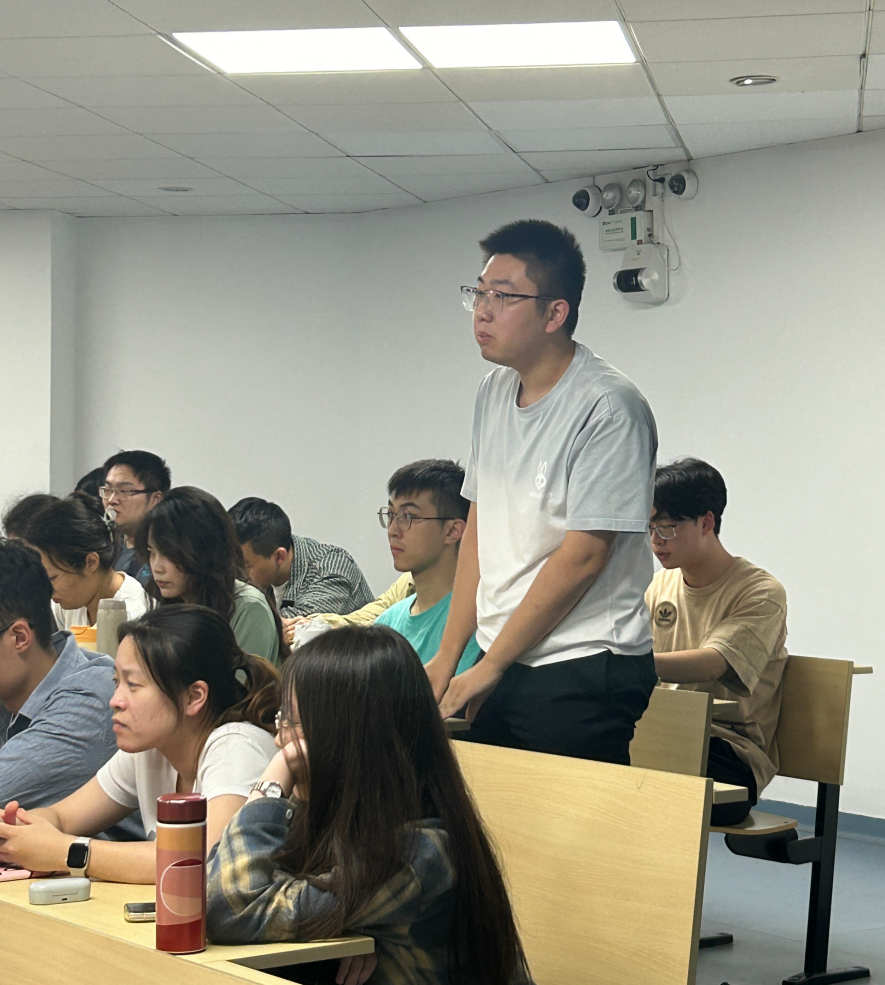
In the questioning session, students asked questions about the different risk preferences of securities asset management and self operation in asset allocation, as well as the key links in "fundraising, investment, management, and withdrawal". Teacher Wu provided answers based on professional knowledge and personal experience, and encouraged students to choose what they are interested in. Choosing is more important than hard work. Through this industry forum, students have gained a deeper understanding and recognition of various asset management business entities, types and models, the four stages of "fundraising, investment, management, and withdrawal", and compliance risk management.
Contributors: Zhang Keyuan, Pan Lei, Cai Liyun
Image provided by: Wu Yuwei, Liang Yushan