On the afternoon of December 2, 2016, Professor Wu Xiaoqun, a history professor at Fudan University, was invited to the School of Statistics and Management to give a lecture to students from Shanghai University of Finance and Economics on; How to Understand the Mythical Stories of Ancient Greece; The themed lecture. This lecture was hosted by Professor Wang Ti, Deputy Secretary of the Party Branch of the School of Statistics and Management, and attracted more than 150 teachers and students to attend.
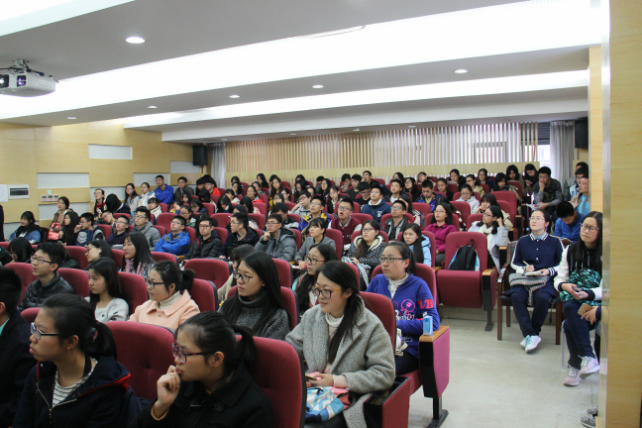
Professor Wu used the Trojan War as a reference to explain the general picture of ancient Greek mythology from three aspects: what the gods looked like in the hearts of ancient Greeks, the twelve main gods of ancient Greece, and stories about heroes.
Firstly, Professor Wu elaborated on the first part of the explanation from the perspective of the homogeneity of human and divine forms. Professor Wu vividly illustrates the origin of the appearance of God through language and examples that are in line with the actual lives of his classmates, such as appearance or form, diet or sleep, emotions or desires. Afterwards, Professor Wu further explained the background of the emergence of gods and the life and psychological state of humans when creating gods from the perspectives of philosophy and psychology by comparing death with immortality, worry with Yongle.
In the second part of the introduction, Professor Wu used the well-known Olympus and the twelve main gods as a starting point to popularize a lot of knowledge about each specific god. Using intergenerational division as a clue, connect the gods together. In addition, Professor Wu also used vivid metaphors of gods such as Zeus and Hera in their story backgrounds, and linked gods with ancient Greek philosophical thought, sculpture, etc., making students' memories of the gods more profound.
Finally, Professor Wu tells a heroic story. “ Tasks that cannot be completed; 、 “ Hero's Expedition; All of these have given students a new understanding of ancient Greek mythological figures.
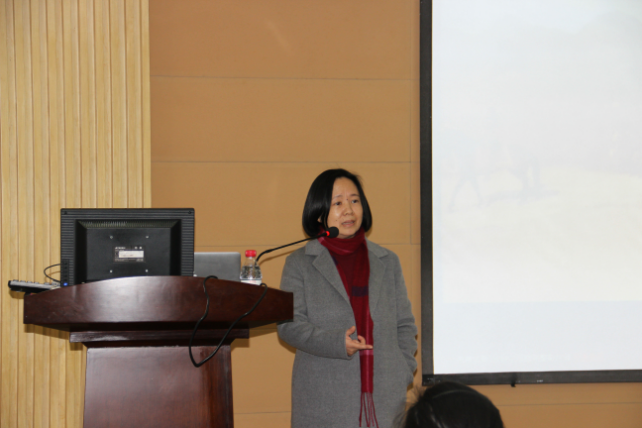
After the event, the students were still unsatisfied with the lecture and asked questions one after another. It is particularly necessary for contemporary college students to deepen their humanistic literacy while studying scientific knowledge. The ancient Greek region is one of the birthplaces of Western civilization, and ancient Greek mythology is an important component of the Western mythological system, which is the earliest literary form in Europe. By studying ancient Greek mythology and engaging in spiritual exchanges with literary masters such as Homer and Hesiod, students can expand their knowledge and subtly enhance their humanistic literacy, achieving the educational goal of synchronous development of scientific and humanistic qualities. This is also the significance of this lecture.