As the performance competition of large models continues to accelerate, where should the next step of AI research go? From April 18th to 19th, FAIC 2026 (Fundamentals of Artificial Intelligence Conference) was held at the School of Statistics and Data Science, Shanghai University of Finance and Economics. The conference sent a clear signal: while continuously enhancing model capabilities, AI research is further moving towards fundamental issues, exploring deeper around mechanisms, efficiency, robustness, and long-term innovation.
Over 400 scholars and practitioners from various disciplines, including universities, research institutions, and enterprises such as Peking University, Tsinghua University, Shanghai University of Finance and Economics, Renmin University of China, Shanghai Jiao Tong University, Fudan University, Nanjing University, Zhejiang University, the University of Hong Kong, and Hong Kong University of Science and Technology (Guangzhou), attended the conference. Focusing on key issues such as "Why are large models effective?", "How are capabilities formed?", "How can training be more efficient and robust?", and "How can solid research support the next stage of innovation?", the participating experts engaged in focused discussions.
The conference agenda reflects a distinct problem-oriented approach. During the keynote speech session, multiple experts shared insights from perspectives such as model structure, mathematical intelligence, and the mechanisms of large models. Their discussions not only focused on fundamental theories but also addressed practical challenges in technological evolution.
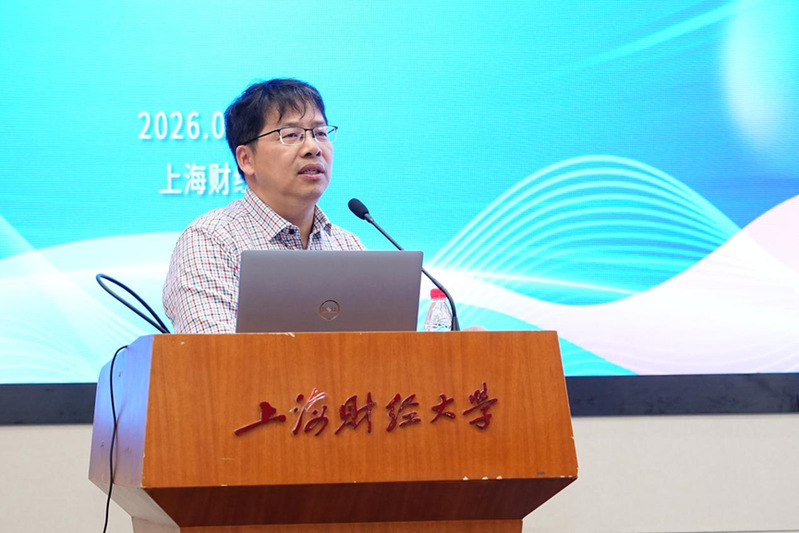
In the opening keynote speech, Professor Lin Zhouchen from Peking University delivered a report titled "Towards Affine and Projective Equivariant Networks – A Differential Invariant Approach", focusing on the issue of equivariance in deep networks. Given that most existing equivariant networks primarily concentrate on relatively simple transformations such as rotation and translation, and struggle to effectively handle affine and projective transformations, he presented the latest work of his team, which utilizes differential invariants to design practical affine and projective equivariant networks. Relevant research indicates that incorporating stronger geometric equivariance into the design of deep networks can enhance the parameter efficiency and robustness of models in tasks such as image recognition, and also provides new insights for model structure innovation in complex visual scenarios.
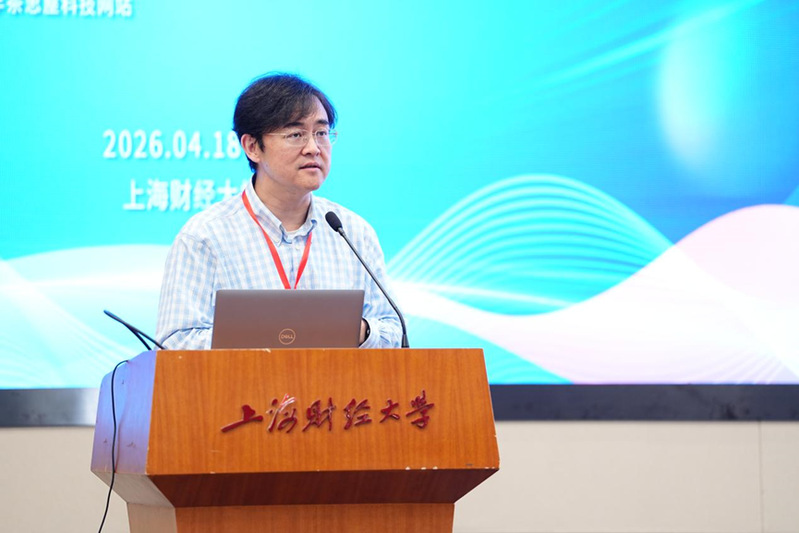
In the report titled "AI for Mathematics: Digitization and Intelligentization of Mathematics", Professor Dong Bin from Peking University discussed how AI can further empower mathematical research from the perspective of the intersection of AI and mathematics. He pointed out that one of the keys to enhancing AI's mathematical reasoning ability lies in promoting the formalization of mathematical knowledge, that is, further "digitizing" mathematics. The report systematically reviewed the development trajectory of the AI4M (AI for Mathematics) field in recent years and introduced the phased achievements of the Peking University AI4M team in formalized model and tool design, automatic reasoning system construction, and high-quality evaluation set development, demonstrating the vast potential of AI in serving basic scientific research.
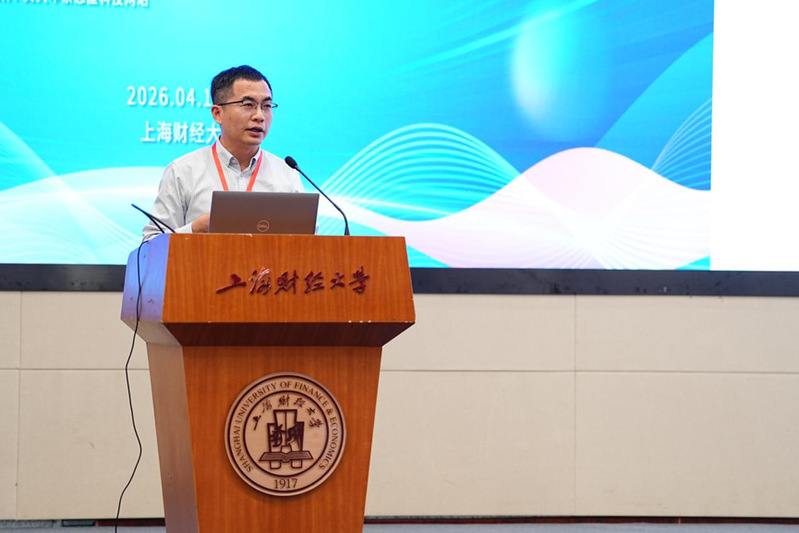
In the report titled "Preliminary Exploration of Large Model Mechanisms", Professor Lu Pinyan from Shanghai University of Finance and Economics further focused on the fundamental question of "why large models are effective". He pointed out that despite the rapid improvement in large model capabilities in recent years, which has continuously refreshed the academic and industrial understanding of the boundaries of AI capabilities, people's understanding of the inherent mechanisms of large models remains relatively limited. Drawing from his own research experience, which shifted from theoretical computer research to focusing on large model algorithms and mechanisms, Lu Pinyan shared his learning and reflections on large model mechanism issues over the past year, emphasizing that the development of AI not only requires continuous promotion of capability enhancement but also necessitates strengthening basic research on model behavior, capability sources, and complexity mechanisms.
From the keynote report, it can be seen that current AI research is gradually transitioning from a phase emphasizing empirical-driven approaches to a new phase focusing on theoretical exploration, methodological innovation, and collaborative advancement of system capabilities. The focus of this conference is no longer merely on "how big the model can be made and how high its performance can be improved", but rather on delving deeper into the intrinsic mechanisms underlying model capability formation, as well as exploring how AI can achieve sustainable development with stronger theoretical and methodological support.
The parallel forums further presented the depth and intersection of current research topics. The forums covered multiple directions such as large model training and alignment, machine learning theory, optimization methods, graph machine learning, model acceleration, and data optimization. Participants were not only concerned with how to make large model training more efficient and stable, but also with the inherent laws behind model behavior, as well as the possibility of deep integration between artificial intelligence and scientific research, and complex scenario applications. The discussions conveyed a consensus: in the face of practical challenges such as the expansion of model scale, rising training costs, and increasing application demands, relying solely on a certain type of method has become difficult to support the next stage of development. Breakthroughs need to be sought simultaneously at multiple levels, including basic theory, method innovation, and system optimization.
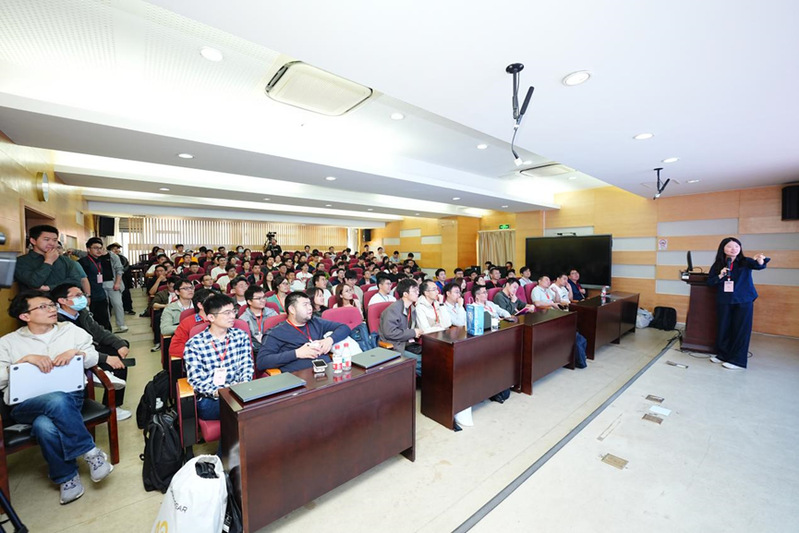
Among them, the parallel forum "Large Model Training and Data Optimization" held in the afternoon session on April 19th received widespread attention. The forum, chaired by Assistant Professor Kai-Feng Lu of Tsinghua University, discussed the key stages of large model training from pre-training to post-training, and then to alignment optimization, forming a relatively complete technical chain. In the report titled "Low-Cost Large Model Training Technology", Professor Wen-Guang Chen of Tsinghua University, based on the complete pre-training practice of the open-source 2B model, systematically introduced the key paths for large model training in academia. The content covered optimization issues such as data cleaning, multi-stage training strategies, adaptation to domestic chips, and bubble compression during training. The report demonstrated how academia promotes large model training through engineering optimization and process collaboration under relatively limited resources, and also reflected the continuous exploration of domestic technology adaptation, general technology optimization, and full-process open-source practice. Subsequently, in the report titled "Data Optimization for LLM Mid-training and Post-training", Assistant Professor Jing-Zhao Zhang of Tsinghua University analyzed the data features required in different stages of large model training, supervised fine-tuning (SFT), and reinforcement learning validation rewards, addressing industry concerns such as "Is harder training data better?" The report attempted to discuss the impact of different data strategies on model capabilities within a fair and comparable framework, and further analyzed whether related training methods could continuously bring performance improvements, demonstrating systematic thinking about the full process of large model training data. In the report titled "Research on Weak-to-Strong Generalization Mechanism in Large Model Alignment", Assistant Professor Ziqiao Wang of Tongji University focused on the key question of "How can weak models assist stronger models to continuously improve?" and introduced the research progress of his team on loss function design, optimization dynamics, and weak-to-strong generalization mechanism. The report addressed a fundamental question: when model capabilities continue to improve, even beyond the boundaries of direct human supervision, how to continue to construct effective alignment paths and promote the development of models to maintain controllability and optimizability at a higher capability level. This forum connected the core links of "how to train large models, how to continuously improve them, and how to achieve more effective alignment" from pre-training, data optimization to super alignment, reflecting the current trend of AI basic research moving from single-point breakthroughs to full-process collaborative optimization.
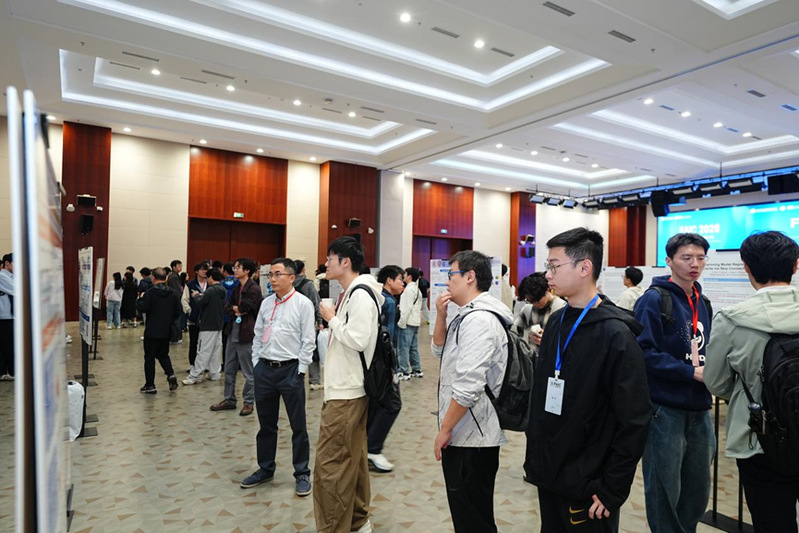
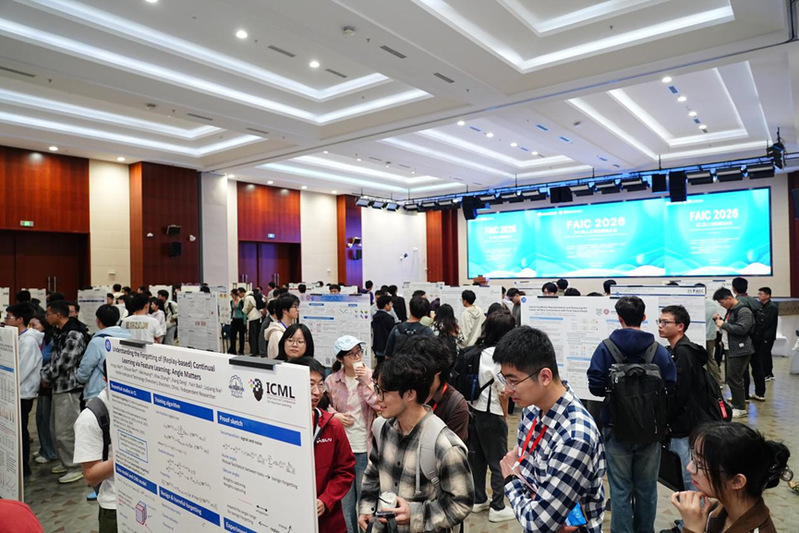
In addition to the content of the reports, the interactions both inside and outside the venue were also very lively. The questions asked after the keynote reports were direct and specific, and the exchanges during the tea break extended to the corridors and poster display areas. The collision between different research directions brought many new cross-disciplinary perspectives. In the free discussion session, the participating scholars did not just focus on pure technical details, but further engaged in pragmatic dialogues around topics such as "how basic research supports practical development", "how to balance model capability and training efficiency", and "how application needs feed back to basic research".
The convening of FAIC 2026 coincides with a crucial stage where artificial intelligence research places greater emphasis on fundamentals, patterns, and long-term accumulation. Whether it is model structure design, training method improvement, or data quality enhancement and cross-application expansion, all ultimately rely on solid fundamental research support. The conference did not deliberately pursue "stunning conclusions", but it sent a clear signal: facing the practical challenges of artificial intelligence entering the "deep water zone", academia and industry are systematically returning to those fundamental issues that cannot be bypassed, and attempting to provide answers step by step.
Contributed by: Xiao Yihao (Student)
Photo provided by: Duan Haijiao