On April 23, 2024, our institution invited Mr. Cai Zhenqi, CEO of Shanghai Yige Information Technology Co., Ltd. and alumnus of Shanghai University of Finance and Economics, to give an industry lecture on the theme of "How to Implement Big Data and AI Projects". In today's digital age, big data and artificial intelligence are becoming key factors in enterprise competition. However, to successfully implement big data and AI projects and realize commercial value, a series of challenges need to be faced. This lecture explores how to overcome these challenges from three aspects: algorithm model accuracy, cost-effectiveness, and productization engineering requirements, in order to achieve effective application of big data and AI projects.
Teacher Cai believes that in big data and AI projects, the accuracy of algorithm models is one of the key factors. However, high-precision models do not always mean they are suitable for industry applications. Mr. Cai Zhenqi believes that in the actual implementation of projects, multiple factors need to be considered, such as data quality, representativeness of data samples, interpretability of models, etc. Only by understanding industry-specific needs and limitations can we ensure that the model can produce reliable results in practical applications. Collect high-quality data and ensure the representativeness of the data samples to improve the accuracy and robustness of the model. Further model validation and testing are required to ensure the interpretability and reliability of the model, as well as its feasibility in practical business scenarios.
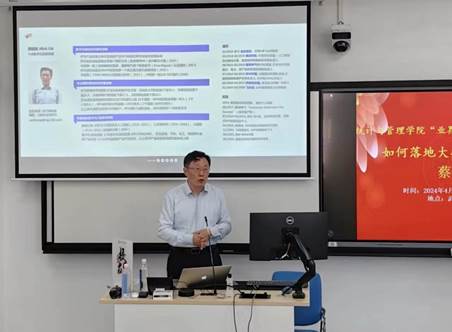
Secondly, Teacher Cai believes that the success or failure of big data and AI projects is closely related to their cost-effectiveness. Before the project is implemented, we should conduct a comprehensive cost-benefit analysis to ensure the sustainable development of the project. Not only should the goals and key indicators of the project be determined for evaluation and monitoring during the project implementation process. It is also necessary to evaluate the costs of investing in human resources, technical equipment, and data collection, and compare them with the expected benefits of the project. Simultaneously consider the benefits brought by the project, such as improving production efficiency, reducing costs, increasing revenue, etc., and evaluate the balance between them and costs.
Transforming big data and AI projects into practical and usable products is a crucial step in the successful implementation of the project. In order to meet the market demand, Teacher Cai informed us that we also need to consider the following solutions: identifying market demand and conducting sufficient communication and cooperation with potential users. Understand their expectations and needs to ensure that the product meets their practical application scenarios. Develop user-friendly interfaces and features to improve product usability and user experience. Ensure the stability and scalability of the system to cope with the constantly growing amount of data and users. Provide timely technical support and maintenance to ensure that the product can continuously provide high-quality services.
Finally, Teacher Cai summarized that achieving effective implementation of big data and AI projects requires overcoming challenges such as algorithm model accuracy, cost-effectiveness, and productization engineering requirements. By understanding industry demands, conducting comprehensive cost-benefit analysis, and meeting market demands, we can successfully implement big data and AI projects. Only through reasonable planning and effective execution can the potential of big data and AI be fully utilized to bring sustained competitive advantage and business value to enterprises.

During the questioning session, students raised questions about the current development trends of big data, and Teacher Cai patiently provided answers one by one, which benefited the students greatly. Through this industry forum, students have gained a deeper understanding of the practical aspects of large models.
Author: You Chenhua
Image provided by: Li Junzhu