On the afternoon of October 22, 2024, our institute specially invited Mr. Wu Jiasheng, the head of the Risk Management Department of Haitong Futures, to hold an industry forum with the theme of "Comprehensive Risk Management in the Securities and Futures Industry". The forum attracted many teachers and students to participate, aiming to deepen everyone's understanding and practice of risk management, especially in the current complex and ever-changing market environment.
At the beginning of the forum, Mr. Wu first introduced the basic concept of risk management to the participants, defining risk as the potential loss or adverse outcome that may occur in the future. He emphasized that the importance of risk management is self-evident in today's financial markets. Mr. Wu divides risks into six categories: market risk, credit risk, operational risk, liquidity risk, compliance risk, and reputation risk. By combining practical cases, he vividly explained the characteristics of each risk and its potential impact on the enterprise, enabling students to have a deeper understanding of the diversity and complexity of risks.
Next, Mr. Wu discussed the relationship between different types of business and risk types, pointing out that each type of business faces unique risks. He emphasized the necessity of developing targeted risk management measures to ensure that enterprises can form effective response strategies when dealing with different risks. This part of the content sparked lively discussions among the attending students, who all expressed that how to identify and manage these risks in practical work is a topic worthy of in-depth research.
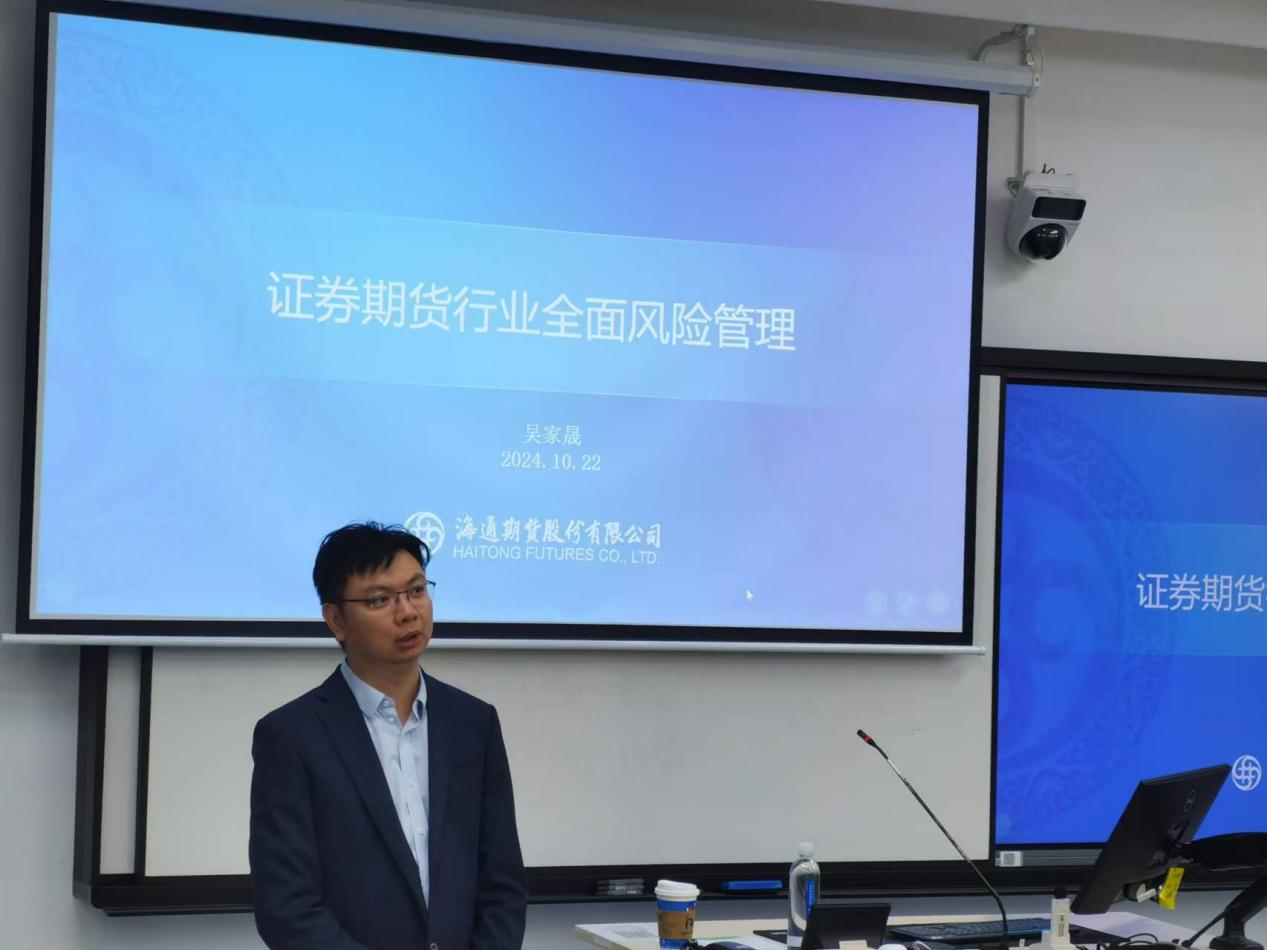
When explaining the bond credit risk management framework, Mr. Wu divided it into three stages: pre investment, in investment, and post investment, covering the construction of internal rating system, inventory management and concentration management, as well as continuous market data tracking and regular rating updates. He emphasized that only through systematic management measures can enterprises adjust their risk management strategies in a timely manner, thereby reducing potential losses. Mr. Wu also provided a detailed analysis of the core indicators of market risk, particularly the meanings of some commonly used symbols and their applications in hedging strategies. He pointed out that understanding these indicators is crucial for risk management personnel, as they can help companies assess the risks brought by market fluctuations and develop corresponding countermeasures. In addition, he reminded students to pay attention to other major market risk indicators in order to continuously improve their professional knowledge in their future careers.
When discussing the setting of market risk limits, Mr. Wu proposed multiple considerations, including the company's risk tolerance, market volatility, liquidity status, market environment, and macroeconomic factors. He emphasized that reasonable limit settings can effectively control risks and ensure the stable operation of enterprises. At the same time, he specifically mentioned the concept of reputation risk and its causes, calling on enterprises to take effective measures to prevent and respond to reputation risk, in order to maintain brand image and social responsibility. Mr. Wu gave a detailed explanation on compliance risks and legal risks, pointing out that enterprises need to establish a sound compliance management system to cope with related risks. He emphasized that compliance management is not only a legal requirement, but also the cornerstone of sustainable development for enterprises.
Finally, Mr. Wu summarized the basic qualities and professional knowledge required for risk management talents, emphasizing that integrity and law-abiding, keen insight, strong resilience, continuous learning ability, good communication skills, and teamwork spirit are the basic qualities of risk management talents. At the same time, he also mentioned the importance of professional skills such as data analysis, programming, and excellent writing abilities, and encouraged students to focus on cultivating these skills in the learning process.
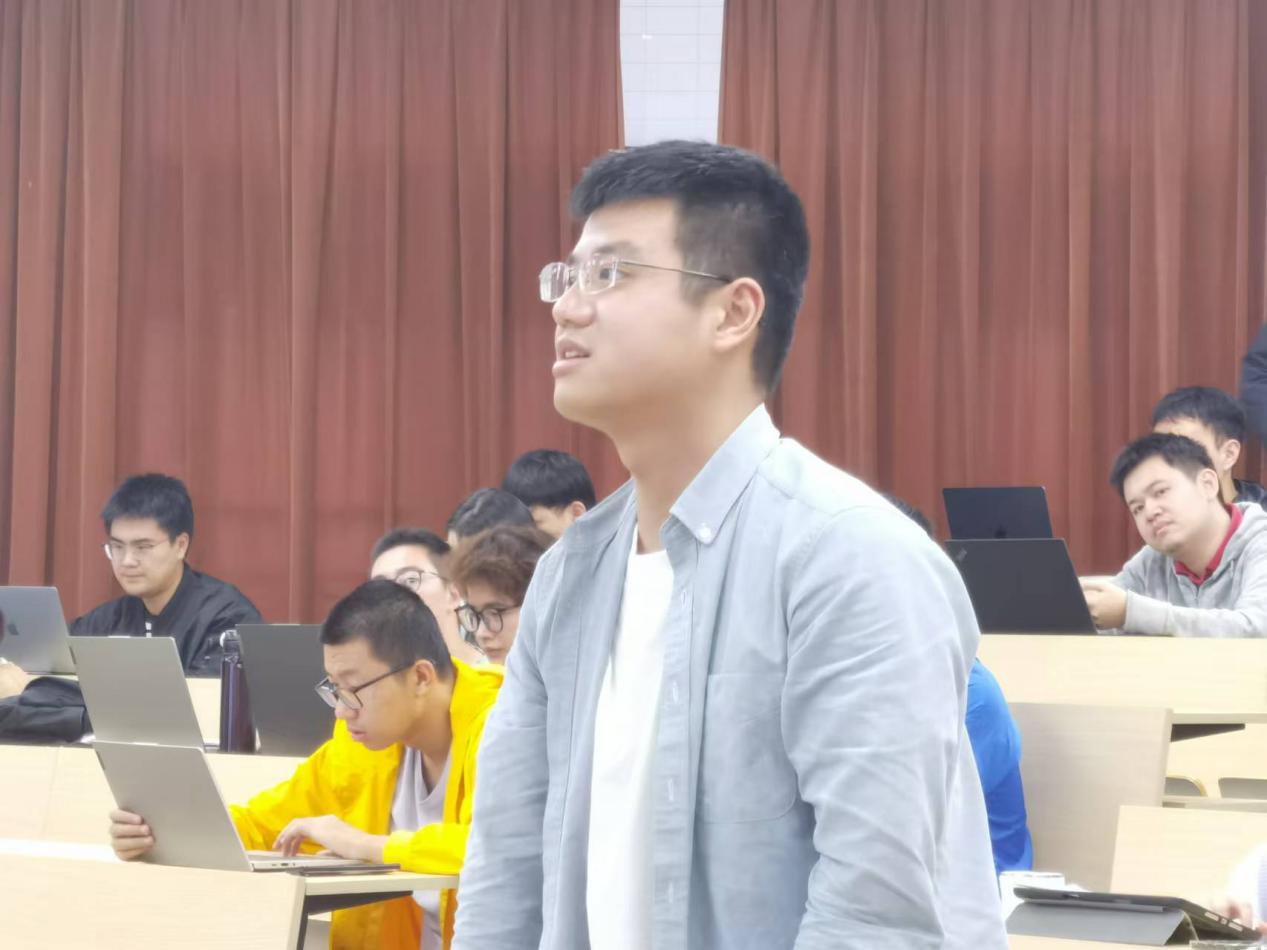
During the questioning session, students actively participated and conducted in-depth discussions on the application of artificial intelligence and financial technology in risk management, as well as the differences in risk management between the financial industry and other industries. Mr. Wu provided detailed and patient answers to this, helping his classmates clarify many doubts. This industry forum not only enriched students' understanding of risk definition, risk types, and risk management industry, but also provided valuable guidance and inspiration for future career development, benefiting students greatly.
Contributors: Hu Haibo, Yang Ruoqi, Bai Zijie
Image provided by: Xu Zinuo